
Director, then VP, Marketing & Brand · Seattle Local Organizing Committee · Feb 2025 to Aug 2026
Led the marketing and branding for Seattle's host committee for the FIFA World Cup 2026. I oversaw the strategy and deployment of the FIFA brand throughout the city, but encountered significant limitations due to their own brand/ partnership restrictions. To address this, I developed a unique logo and branding that became the recognizable Seattle-specific branding for the World Cup.
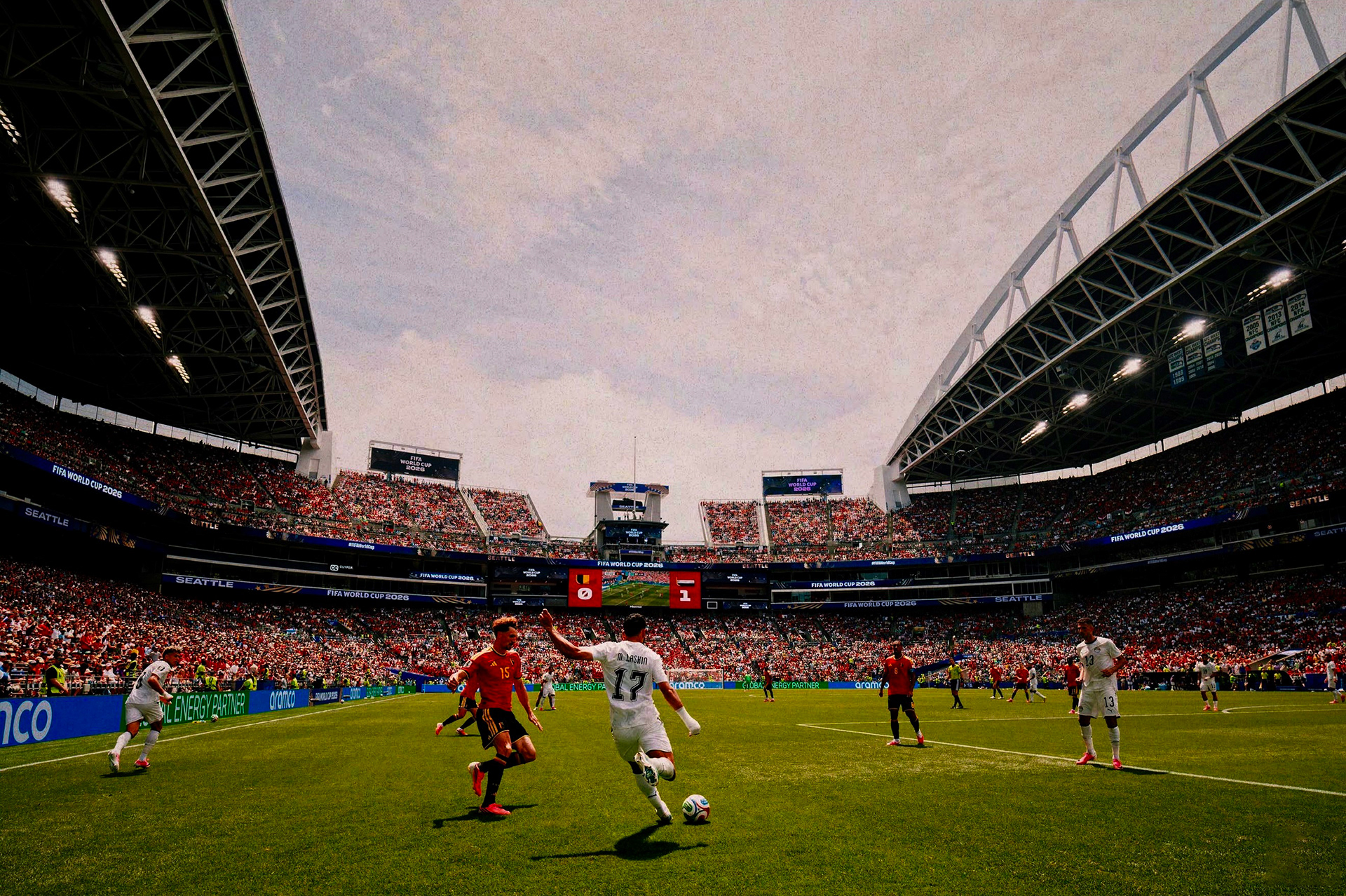
By The Numbers...
#1 U.S. host city for fans, Action Network Fan Experience Index
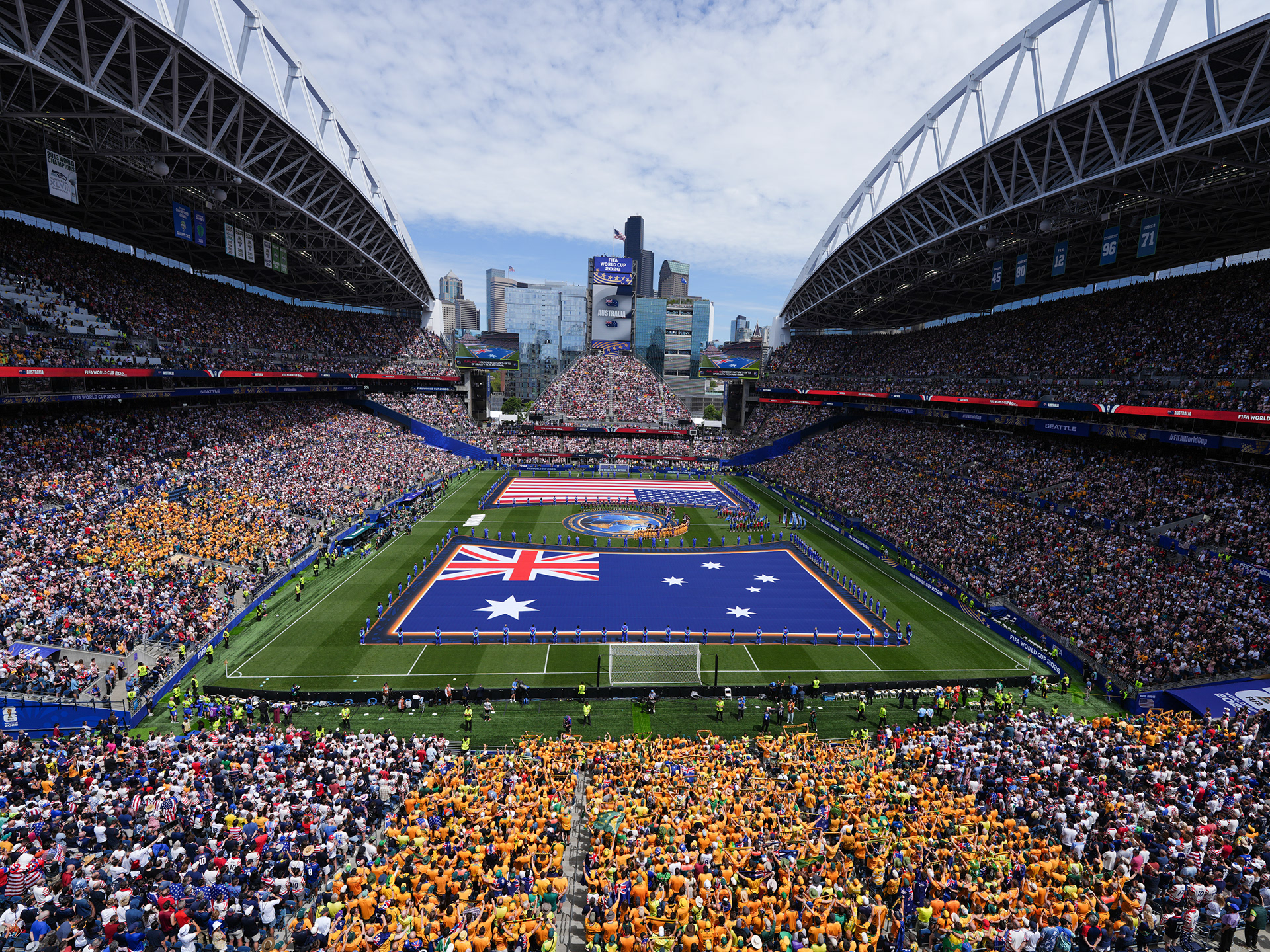
#1 Stadium experience among all World Cup venues, The Athletic
#1 Host city poster of all sixteen, Sports Illustrated
$889M in economic benefit (surpassing all predictions)
3M+ Downtown visits across six match days
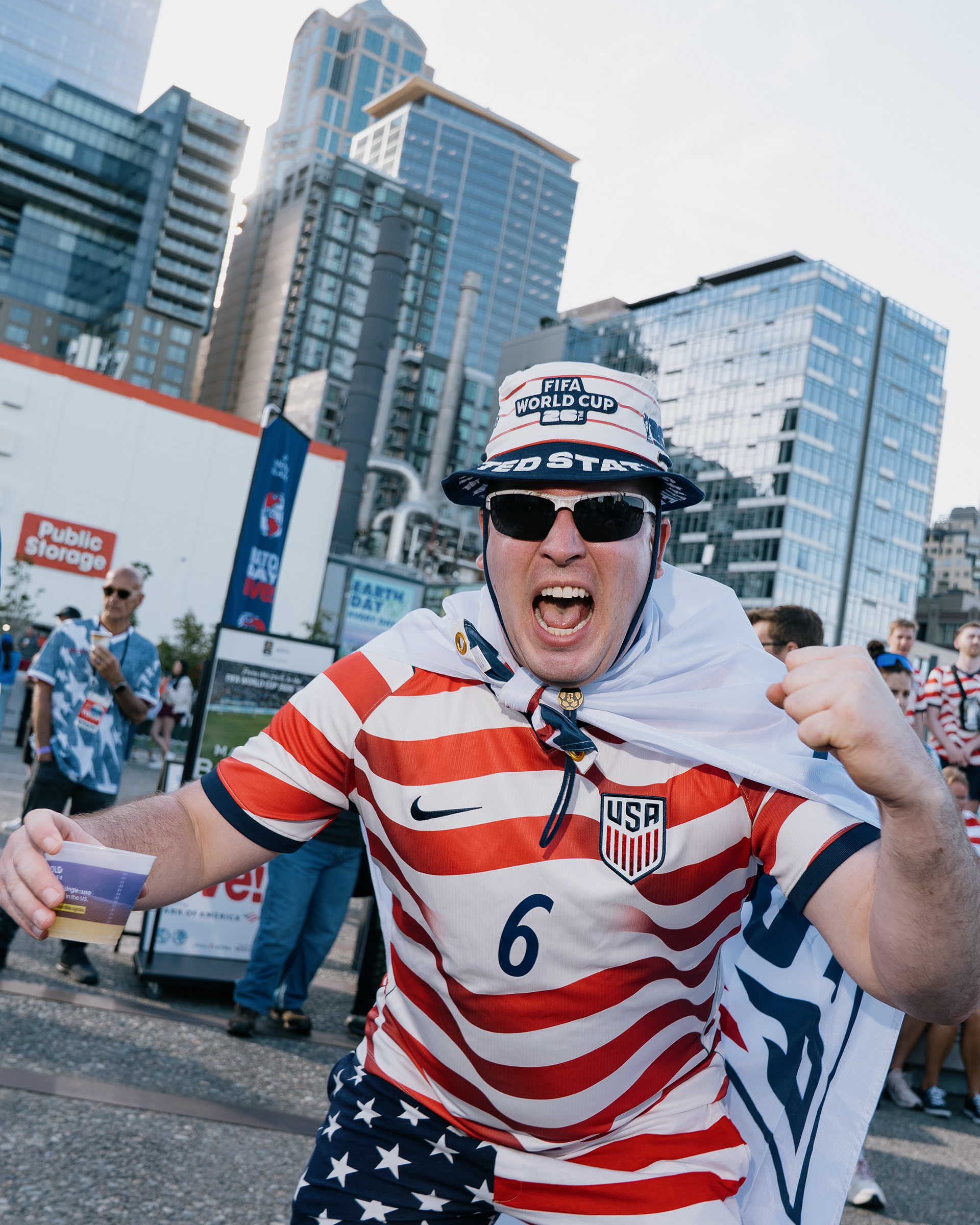
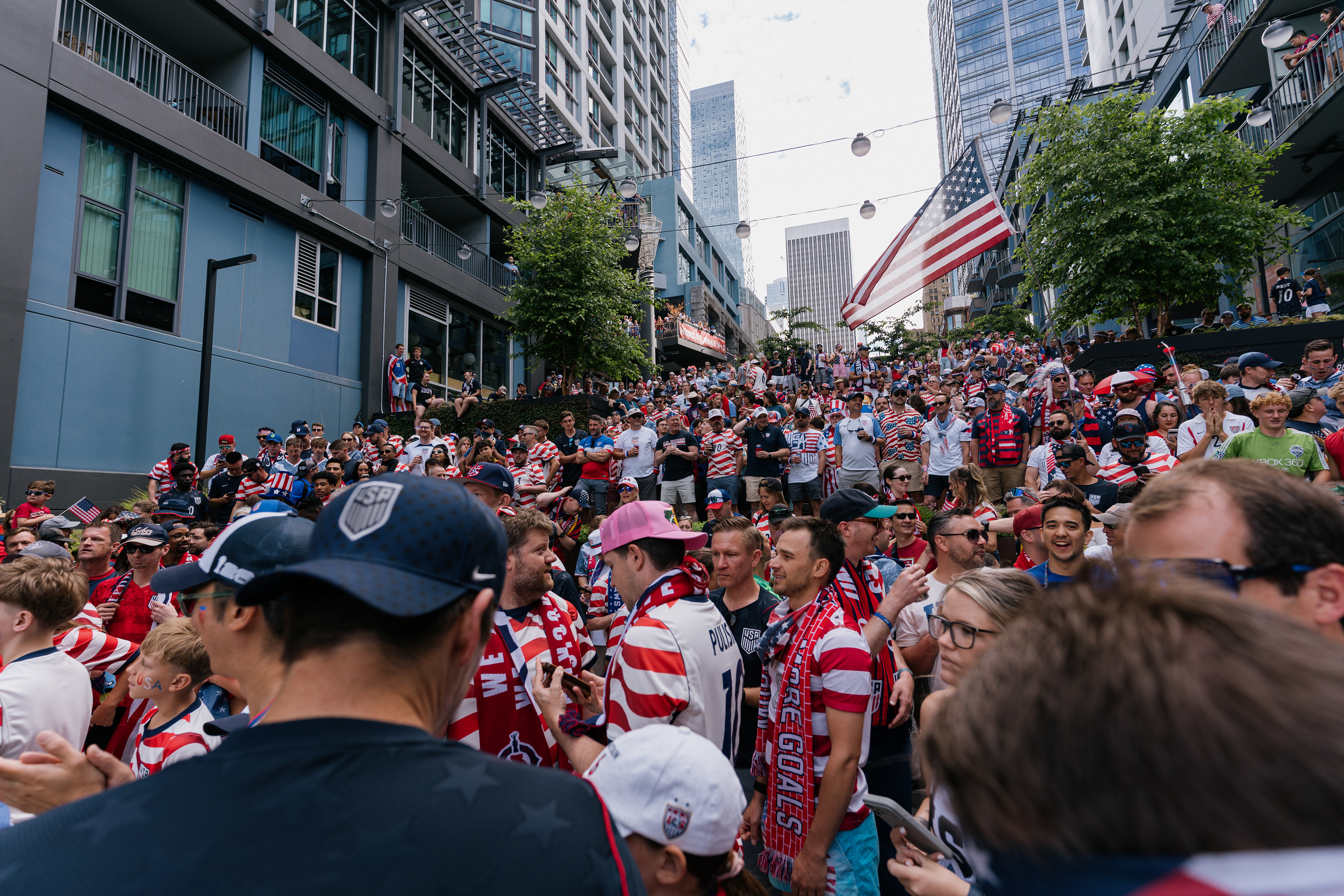
1.2M+ Seattle Fan Celebration Attendees
400+ Organizations engaged in planning & coordination
5.4M Light Rail Boardings (new record)
300+ Small Businesses featured in SEA&WIN Mobile App
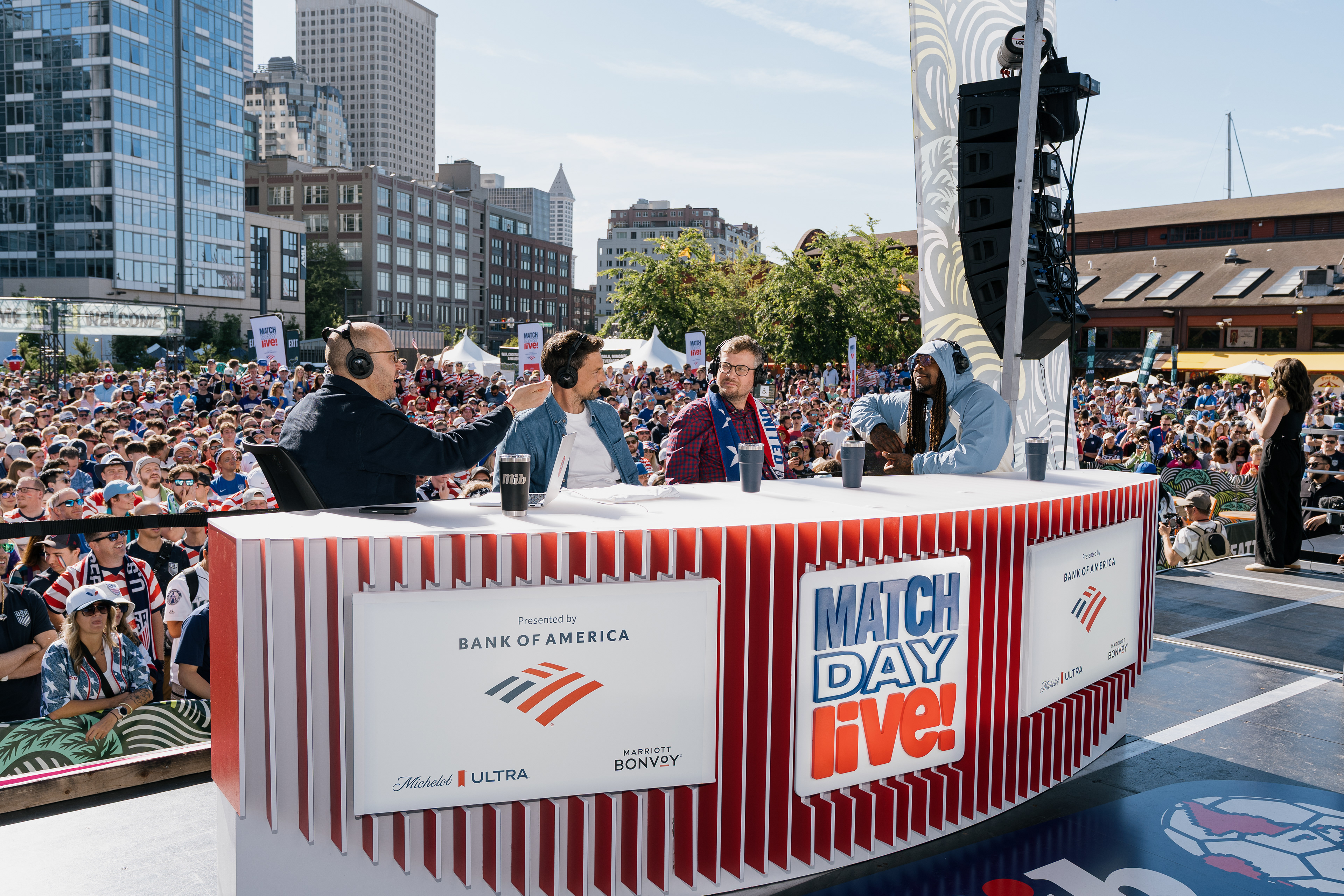
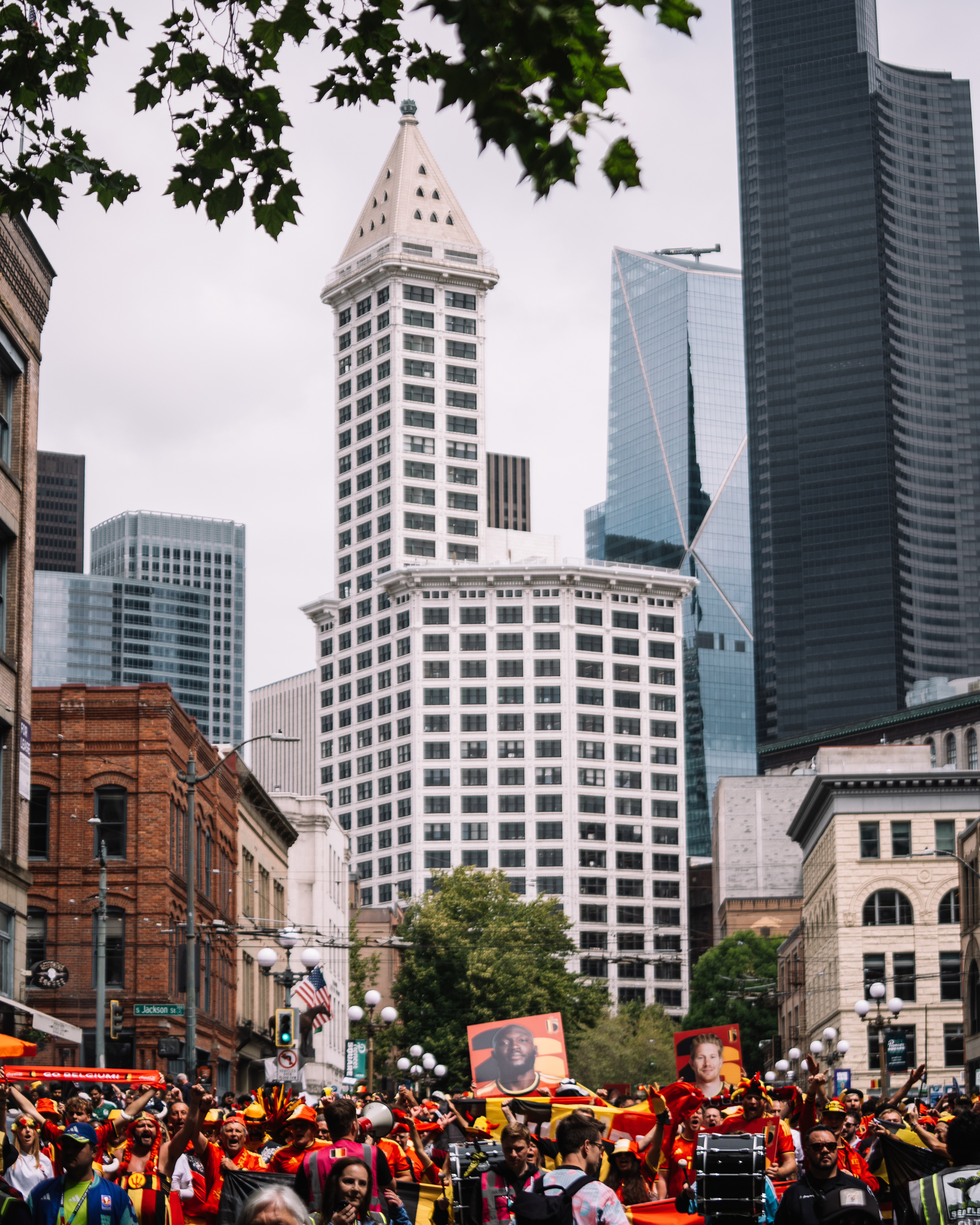
70K People Marched to the Matches
2-10x Business volume increase in Stadium Neighborhoods
350+ SEA Beacons donated to small businesses

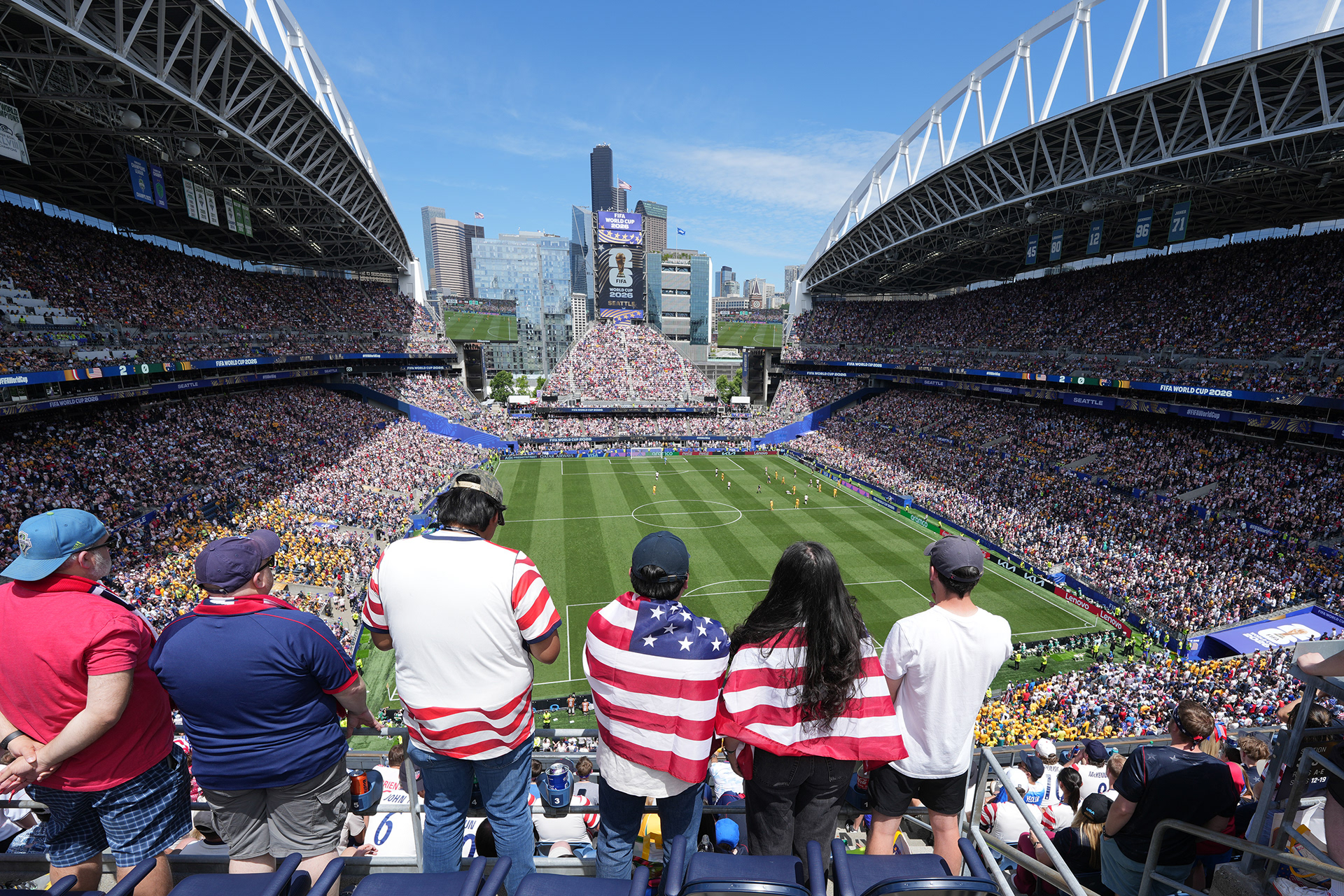
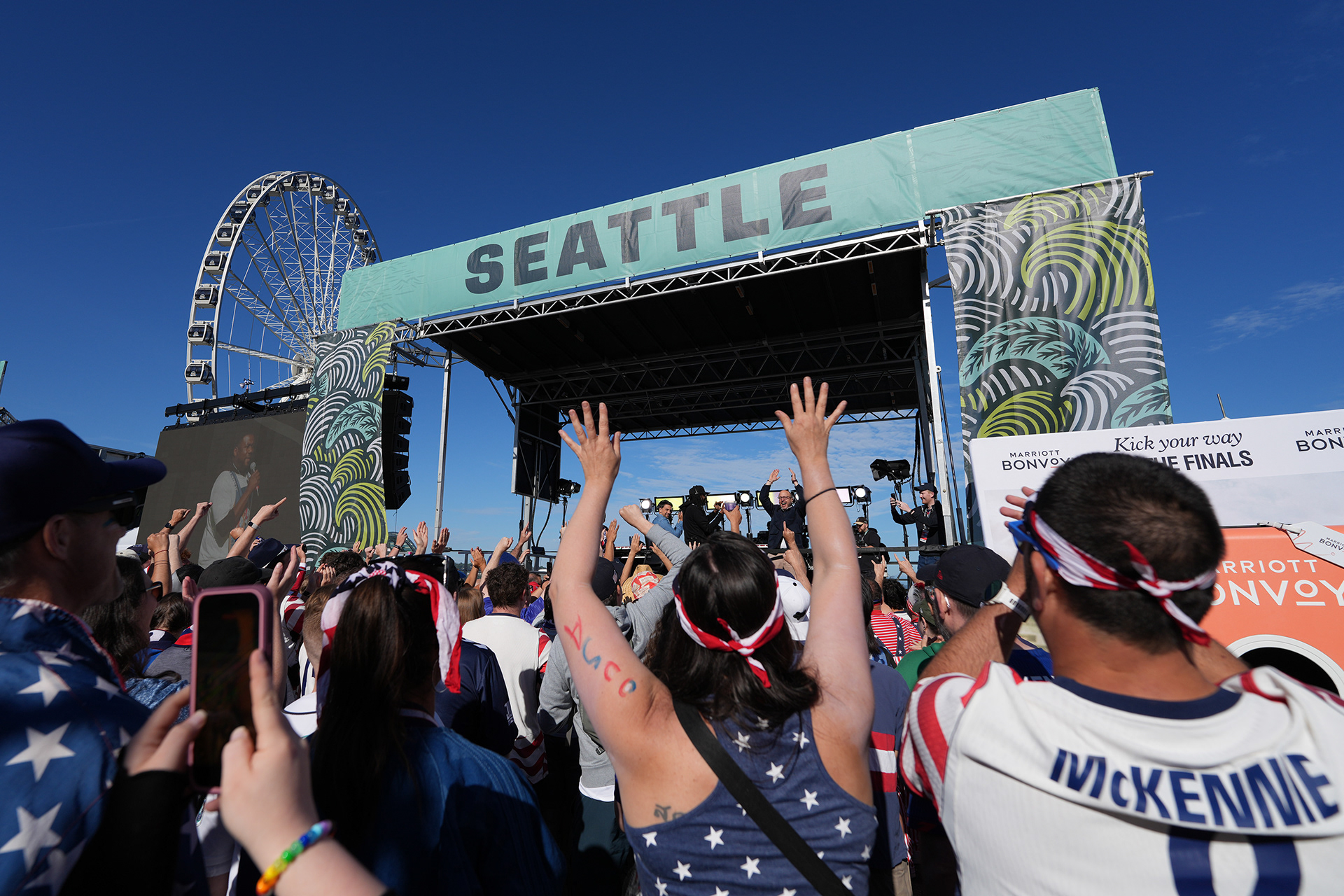
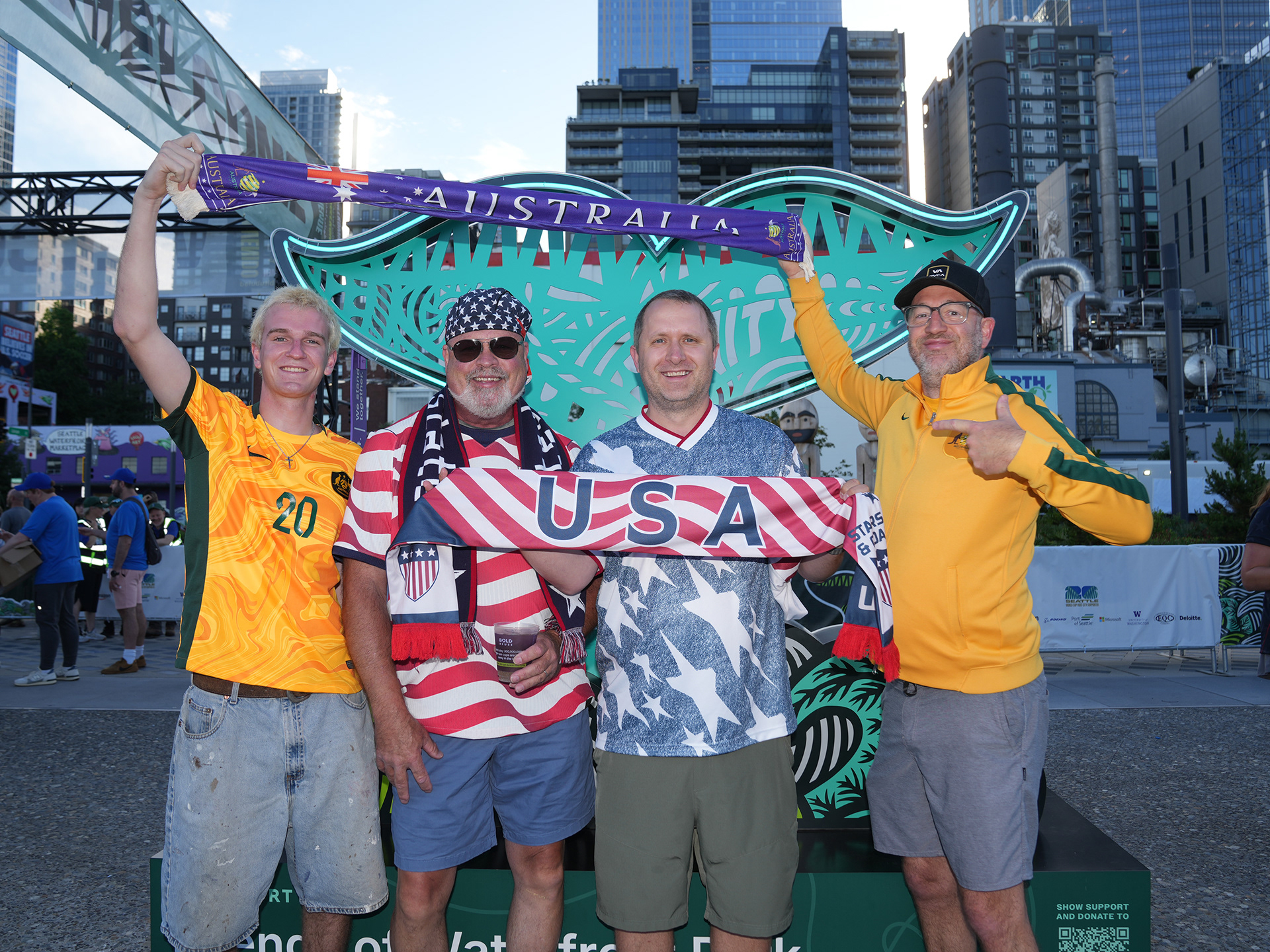
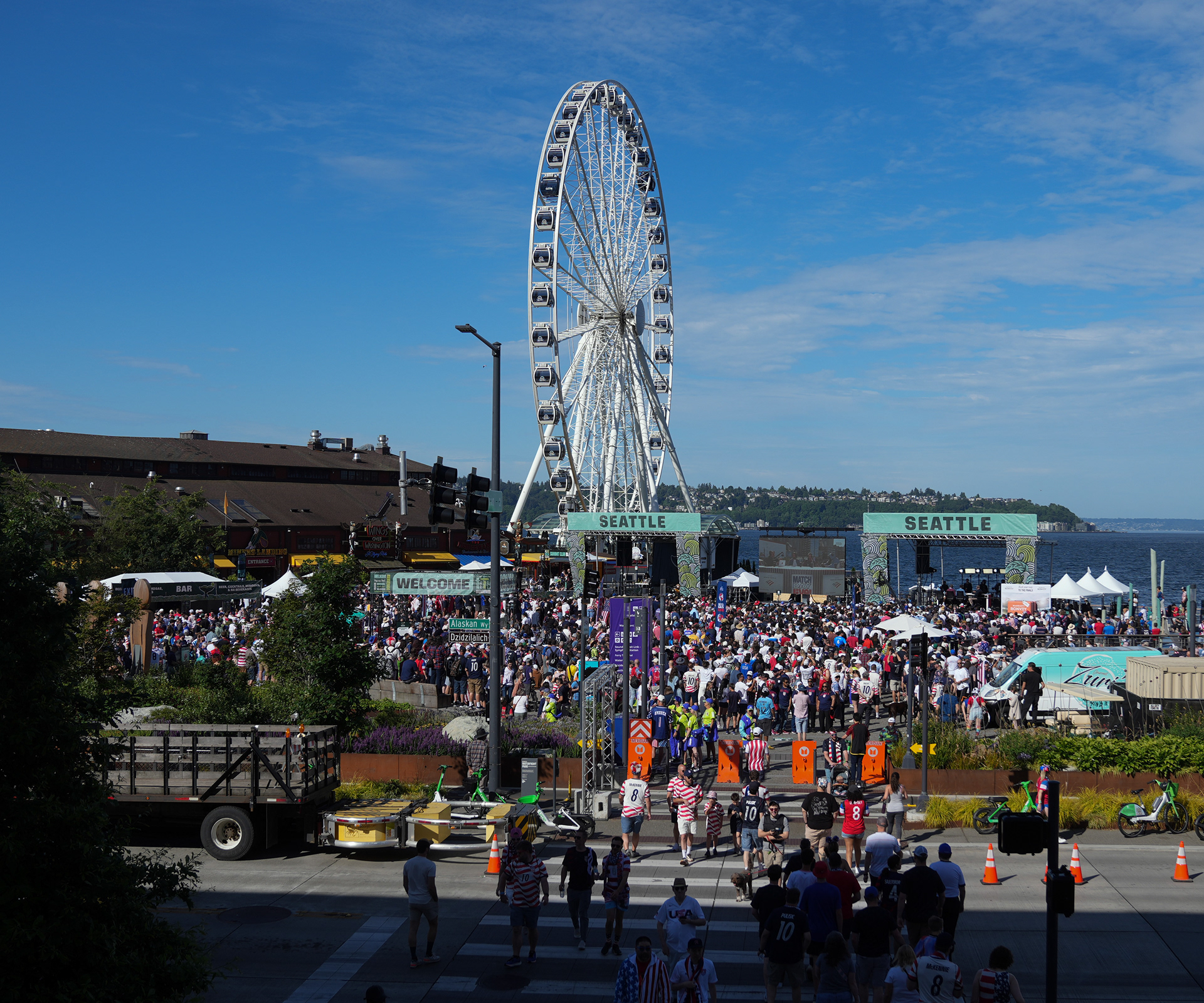
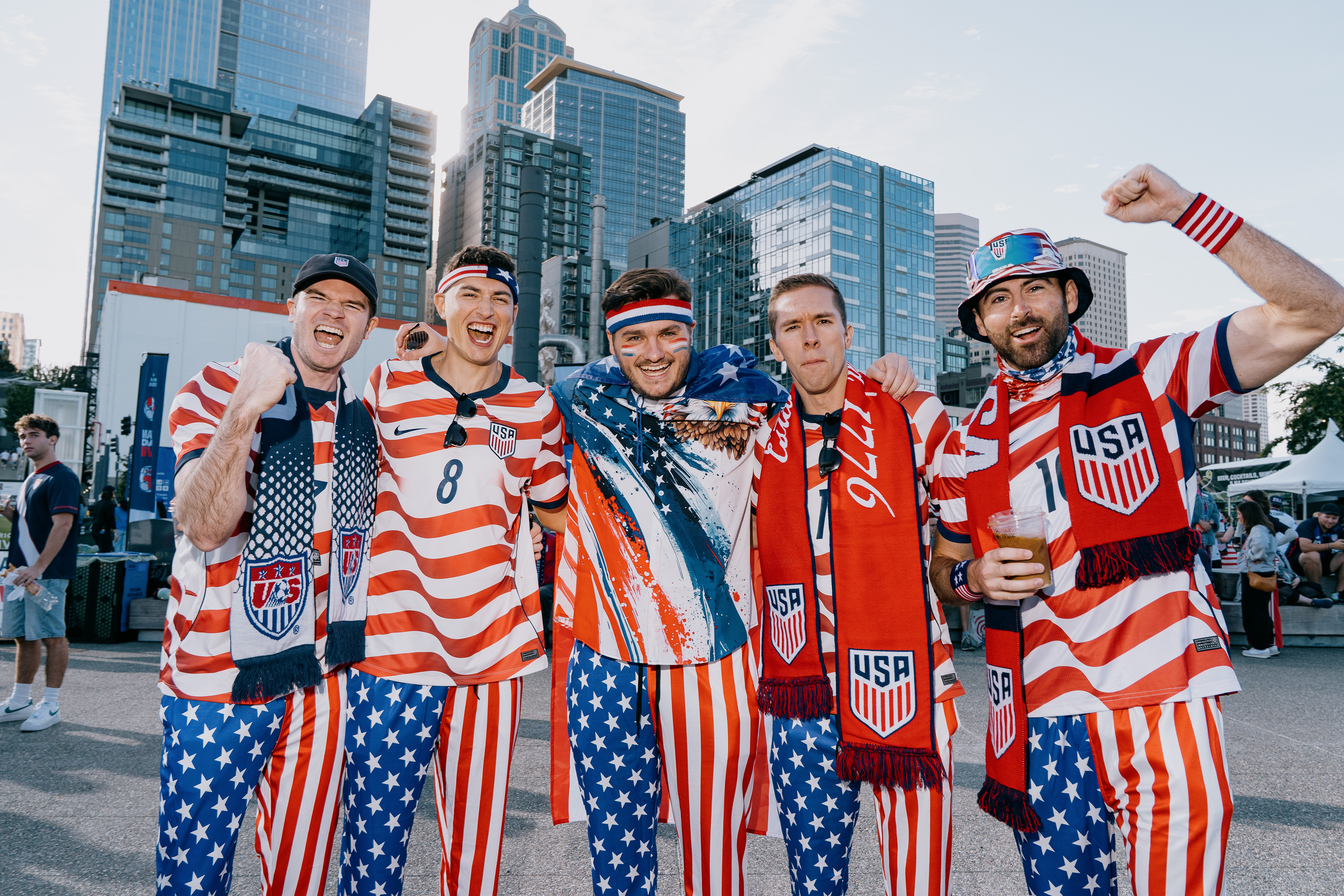


WHAT MY JOB ACTUALLY WAS
From the start, Seattle's goal was a lasting legacy: using the world's largest sporting event to benefit the city before, during, and long after the final whistle. Our CEO, Peter Tomozawa, and Chief Legacy Officer, Leo Flor, set that strategy and built a legacy focus no other host cities had.
My job was to oversee how brand strategy and marketing could help us achieve that goal.
That meant vendors and contractors, content and social, creator partnerships, and FIFA brand approvals. Anywhere our logos appeared, I had final approval. I also directed a network of 20+ photographers, videographers, and creators to bring the brand to life.
NAVIGATING A COMPLEX BRAND STRATEGY
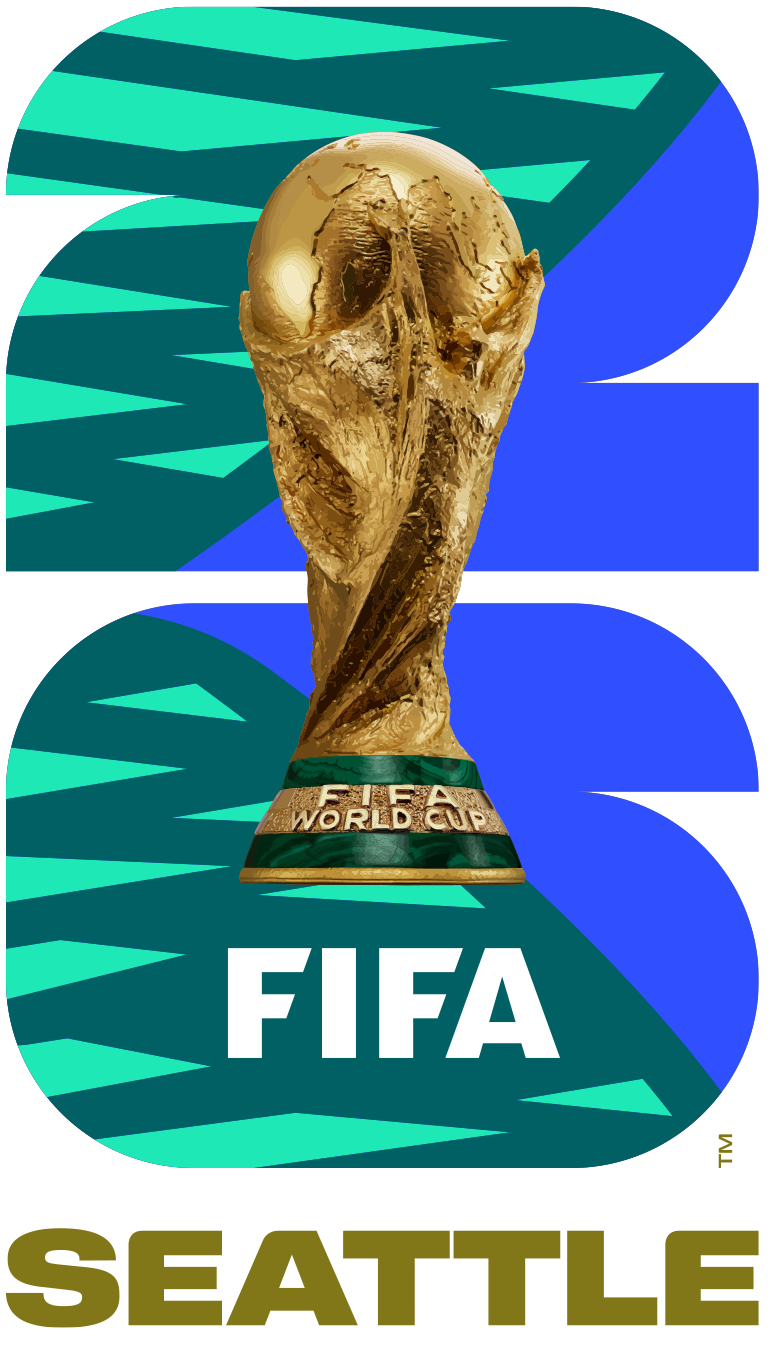
The official FIFA World Cup 2026 Seattle Host City logo.
FIFA's Host City look and feel arrived shortly before I joined in early 2025. Leadership wanted to push it out through small businesses, neighborhood associations, and civic partners, so locals had something to rally around.
FIFA said no. Hard no. The restrictions meant the one asset designed to represent the World Cup in Seattle couldn't be used by the people who needed it most. A restaurant in the Chinatown-International District, a shop in Tacoma, a city department putting up wayfinding: none of them had a legitimate way to say they were part of the biggest sporting event in the city's history.
The only way an organization could use this logo was to become an official Host City Supporter, and even then, every use of the logo lock-up with the sponsor needed FIFA's approval. Nine large local companies became the Official Host City Supporters, using both the Host City logo lock-up and our 'Legacy' logo and branding.
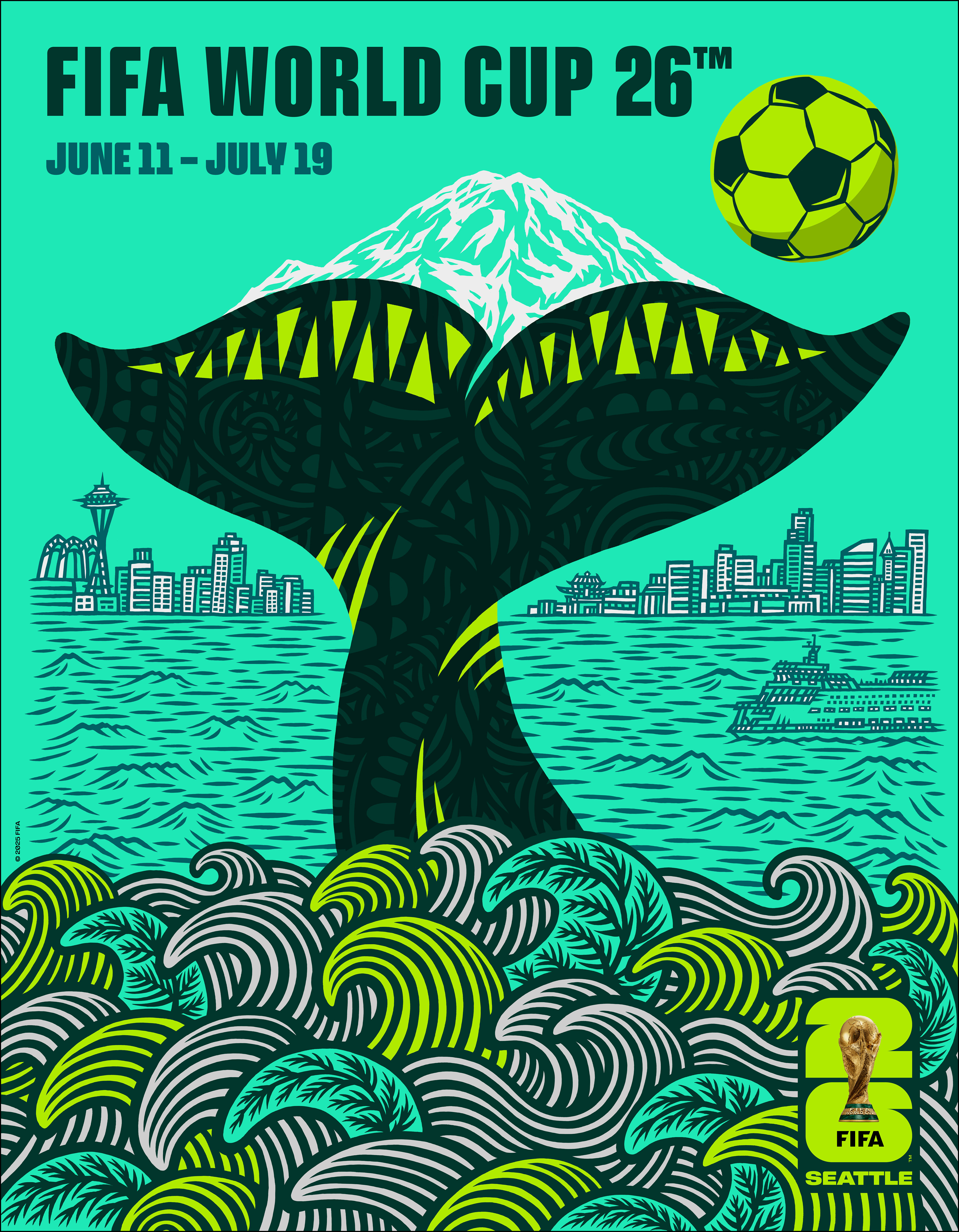
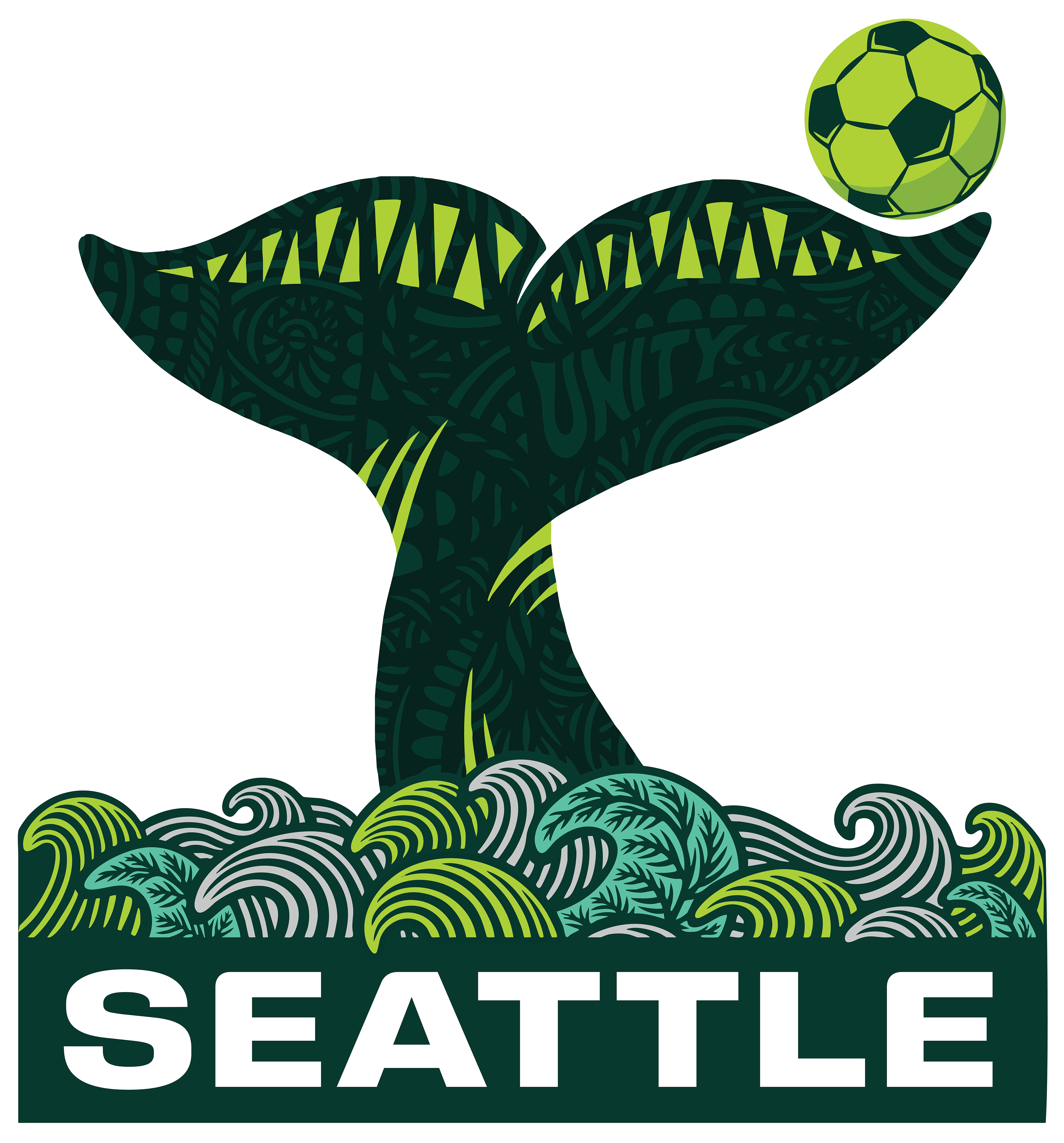
The 'Legacy' logo
Around the same time, Seattle unveiled its official Host City Poster by Shogo Ota (above), chosen by a nine-person volunteer panel. Its central image, a whale tail developed with local tribes, carries Coast Salish and Puyallup heritage. Sports Illustrated ranked it the best of the sixteen host-city posters.
I built the logo and brand system out of it. That work is worth describing, because it is the part nobody sees. Shogo submitted a JPEG. I vectorized the entire poster by hand, then pulled individual elements out of it and rebuilt them into a system that could stand on its own: a mark, a palette, a set of rules, and components that held together whether they appeared on a storefront window, a neon sign, a 60-foot concrete column, or a phone screen. A poster works once, at one size. A system has to work everywhere, forever, in the hands of people who have never met you.
It was ours, so we could give it away.
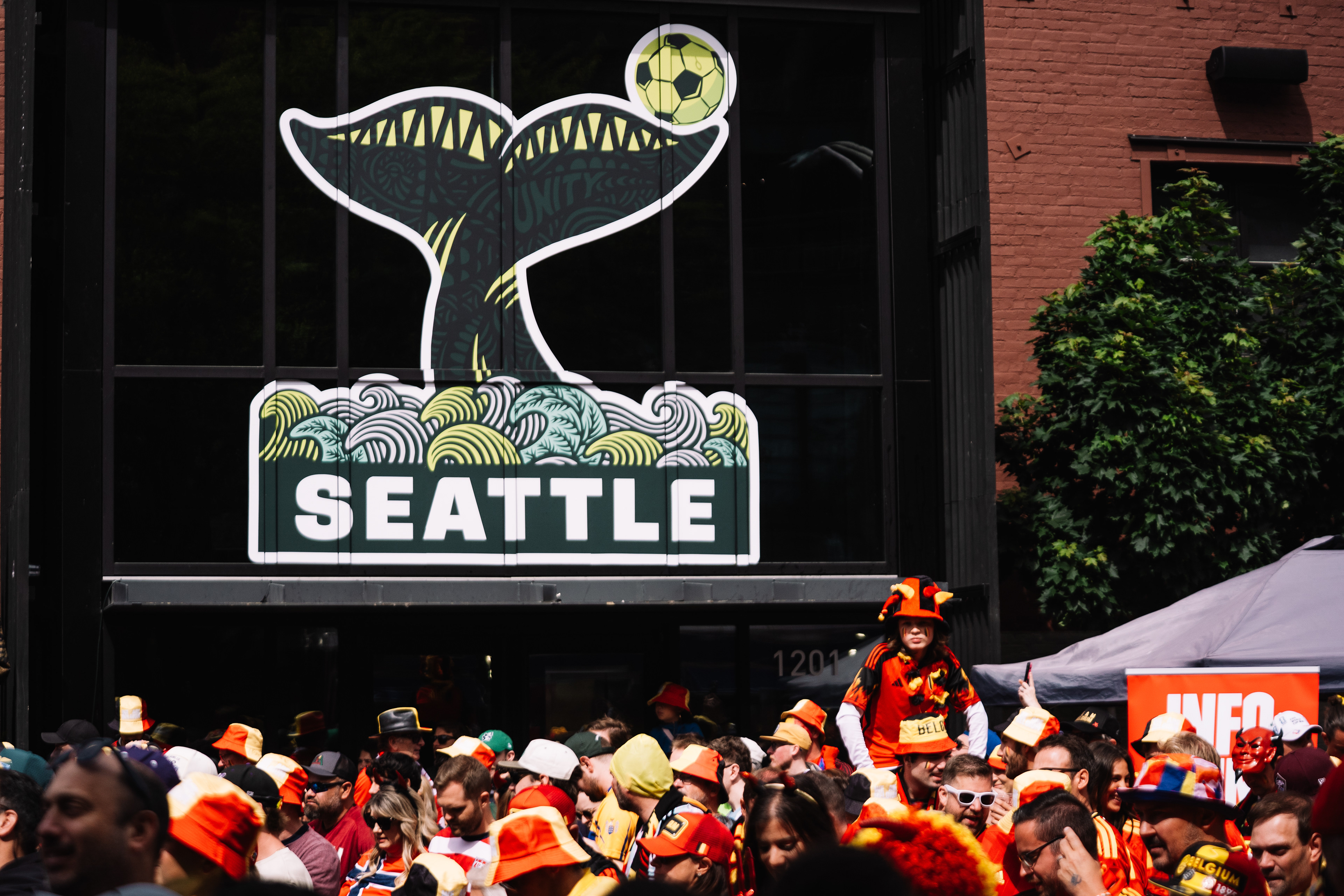
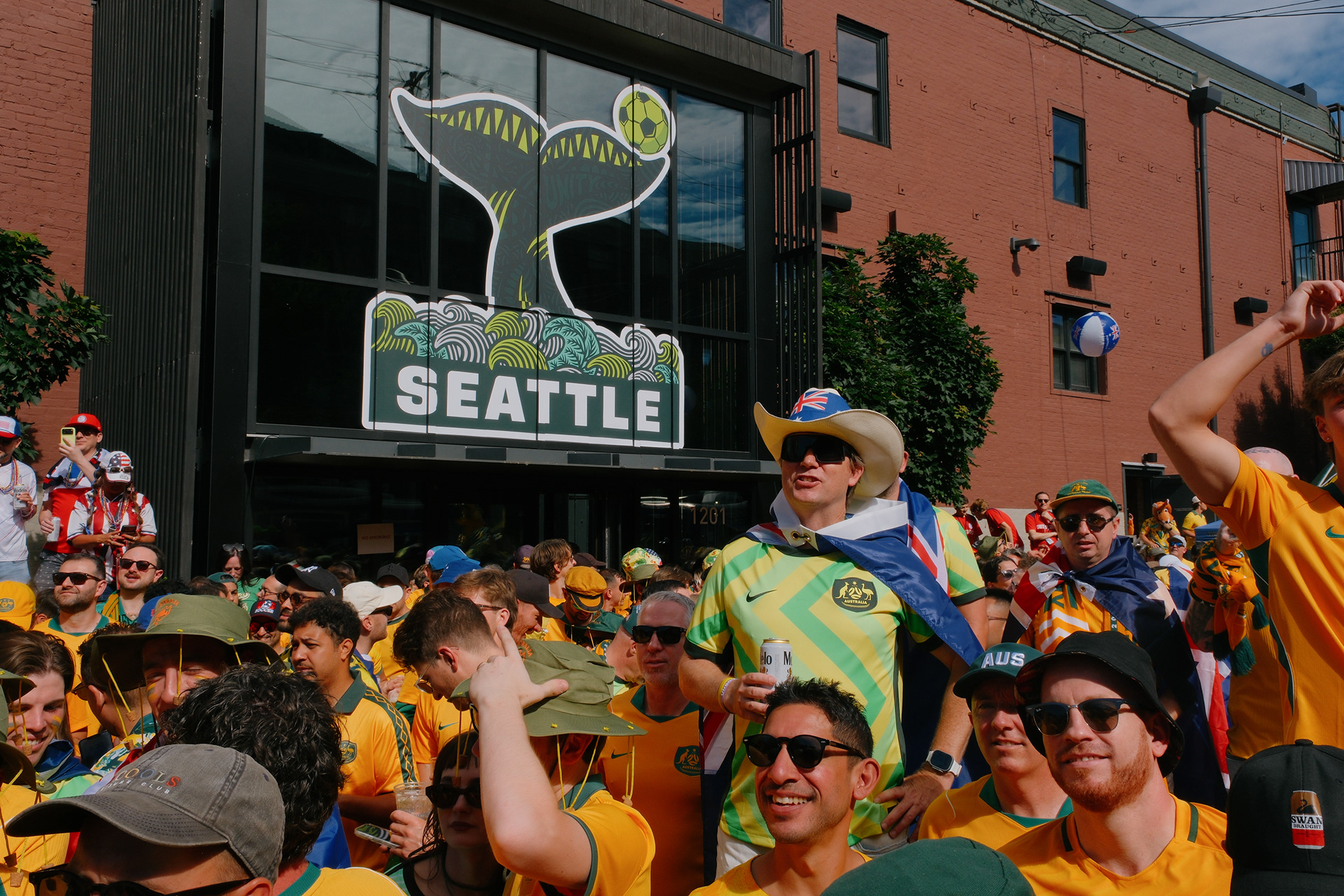
That system went out across the city: into storefronts, onto the Monorail columns, and into neighborhoods with no other visual connection to the tournament. People came to recognize it as the World Cup in Seattle.
The constraint made the brand. If FIFA had said yes, Seattle would have run a licensed campaign and left nothing behind. Because they said no, the city ended up with something it owned.
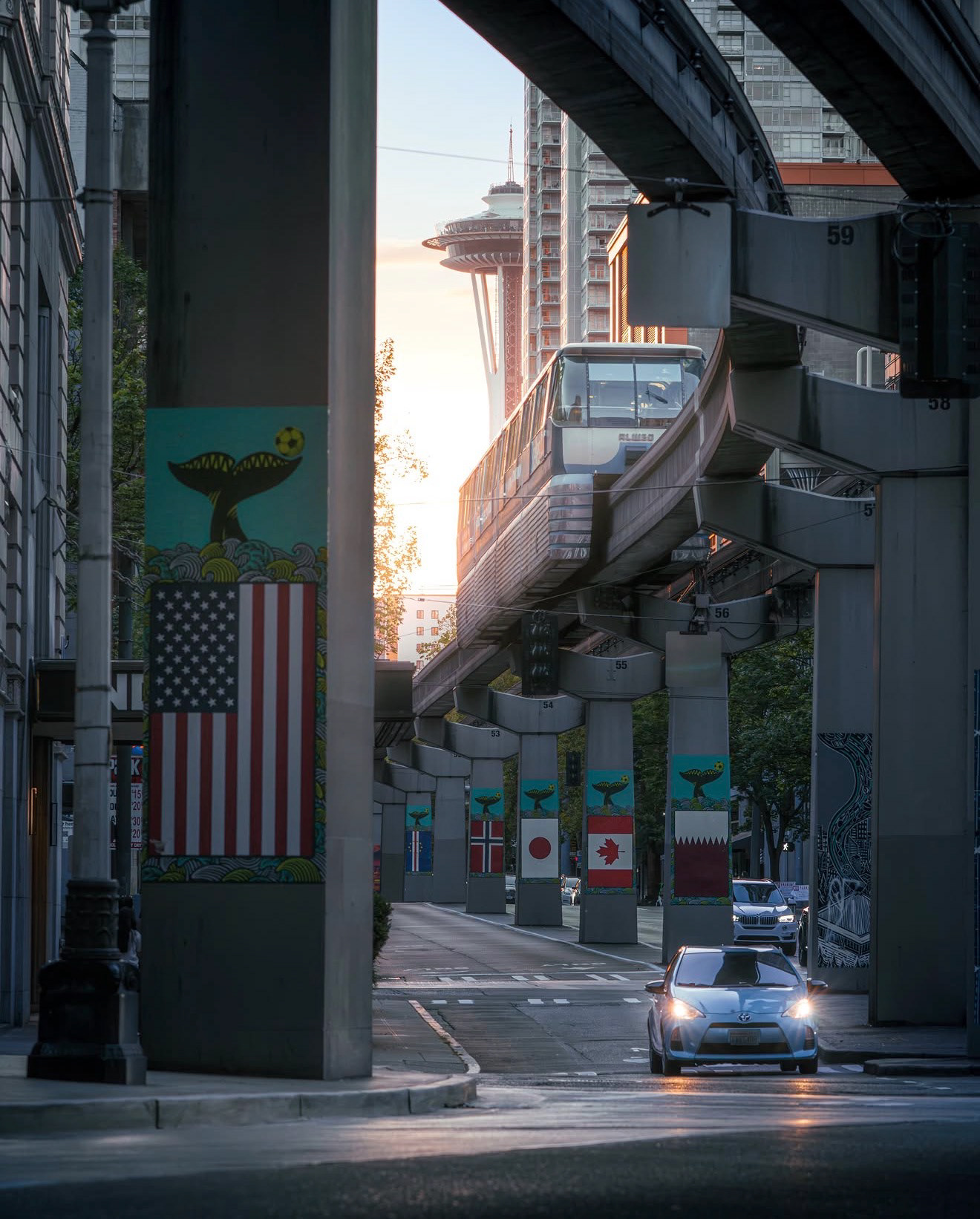
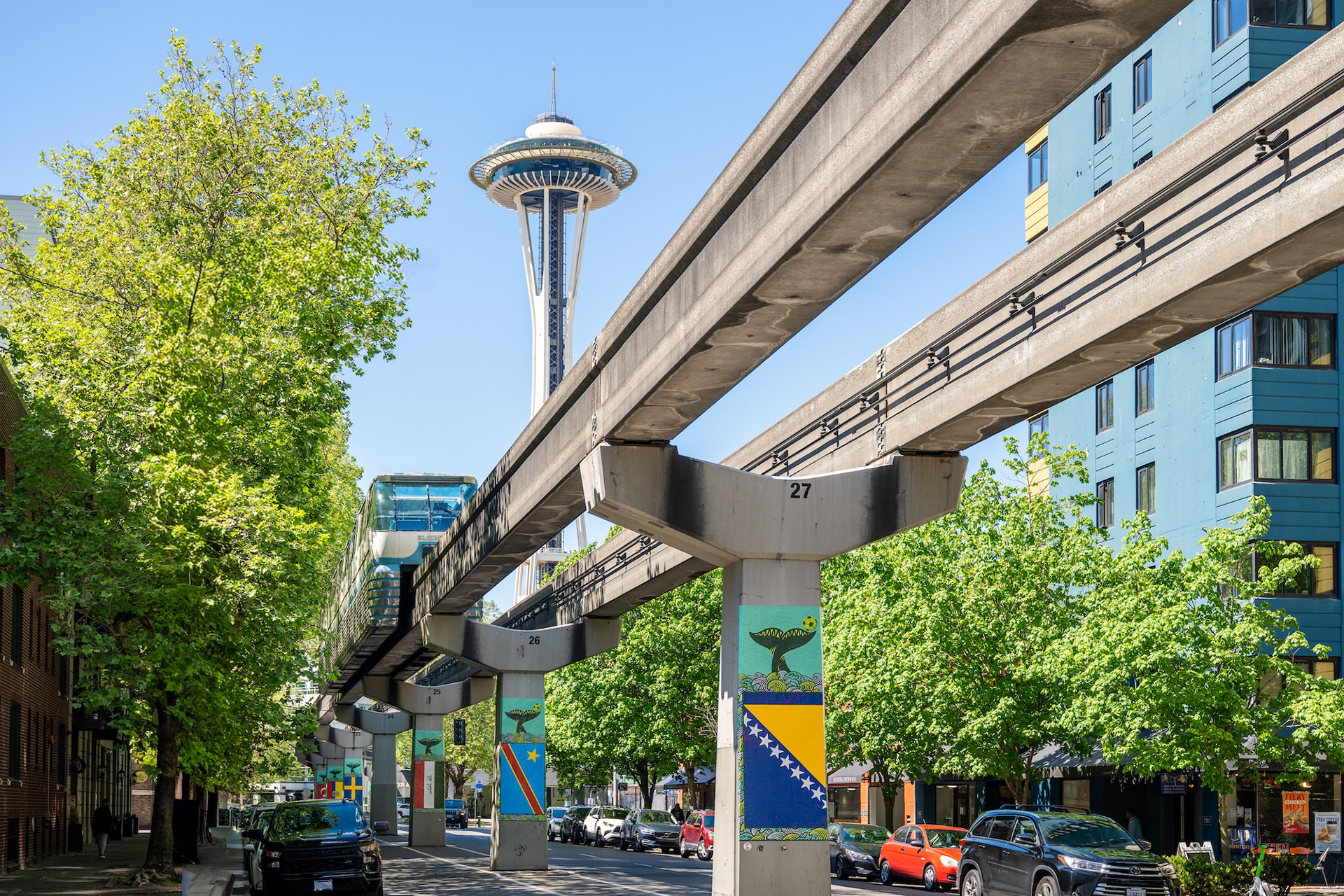
THE MONORAIL COLUMNS - CORRIDOR OF NATIONS
A ride on the Seattle Center Monorail became a trip around the world.
The opportunity: How can we use the monorail columns to 'welcome the world' leading up to and during the 2026 World Cup in Seattle, while also highlighting local initiatives?
The solution: I combined our 'Legacy Branding' with the flags of every country competing in the World Cup, and directed some of that attention to local programs that deserve greater recognition - such as the Seattle Children's Hospital.
The solution: I combined our 'Legacy Branding' with the flags of every country competing in the World Cup, and directed some of that attention to local programs that deserve greater recognition - such as the Seattle Children's Hospital.
Every nation competing in the FIFA World Cup was represented along the route between downtown and Seattle Center. National flags shared the corridor with artwork celebrating Pride, Juneteenth, Indigenous Peoples, Seattle Children’s Hospital, and Shogo Ota’s official Host City Poster.
For thousands of visitors arriving from around the world, spotting their own flag hanging in the heart of Seattle was something simple and powerful.
It was a welcome that didn’t require a language translation.

Guided by Seattle Children's art therapists, patients from the hospital's oncology and rehabilitation units used therapy sessions to process their medical journeys through color and form. With families' permission, several of those original pieces — including a detailed study of a hospital room, an anatomical heart made of embroidery thread, and a group painting created using adaptive methods so every child could take part — were adapted into a single Monorail column, moving the patients' stories from the bedside to a citywide platform.
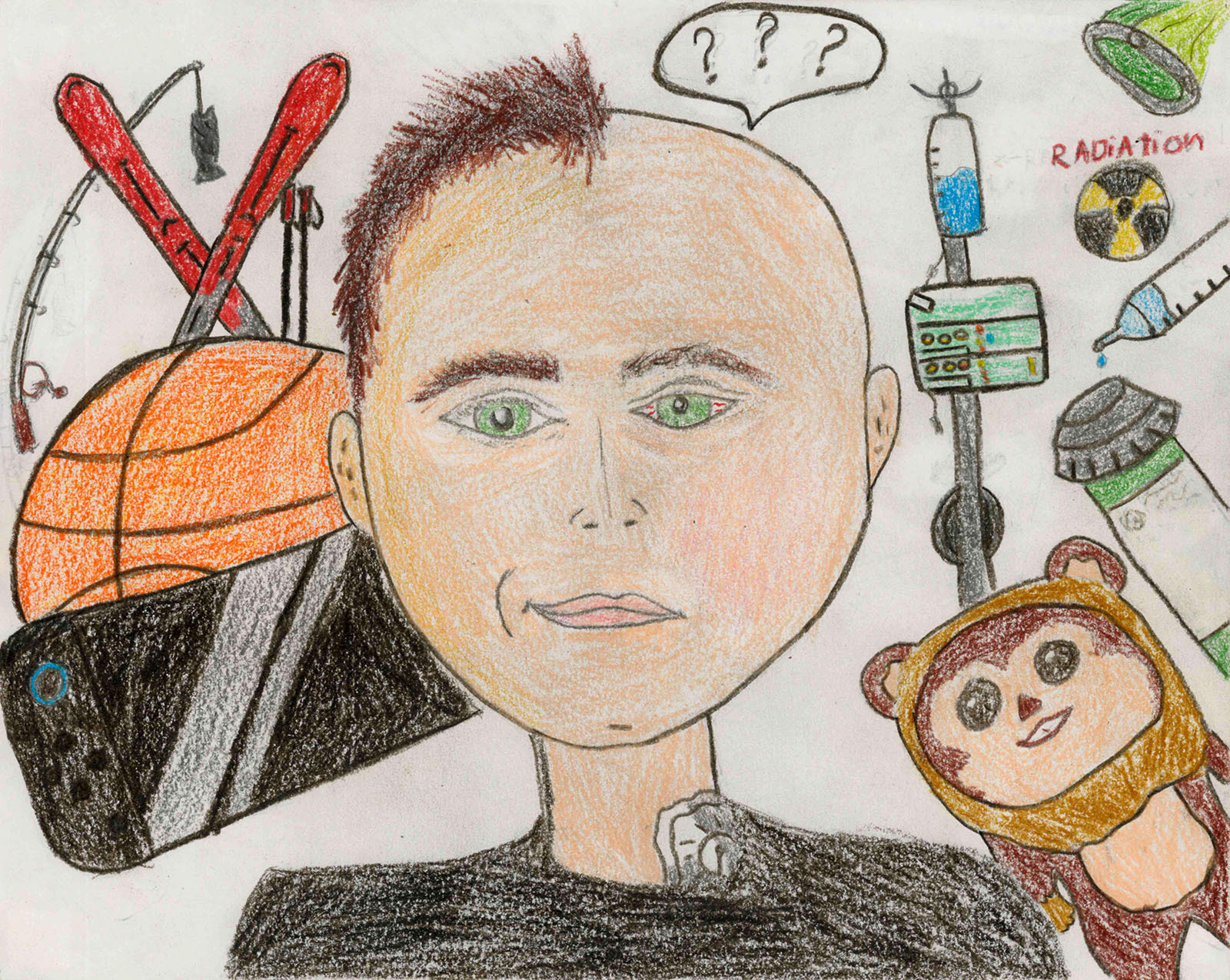
Jaxon's Legacy
One piece on display honors Jaxon, who was 13 when he created it in colored pencil while navigating a four-year journey with Ewing Sarcoma. Jaxon described art as something that helped him process and share how he was feeling, especially during stressful moments. His family has shared the piece publicly to shine a light on childhood cancer and offer hope to other children still facing their own battles.
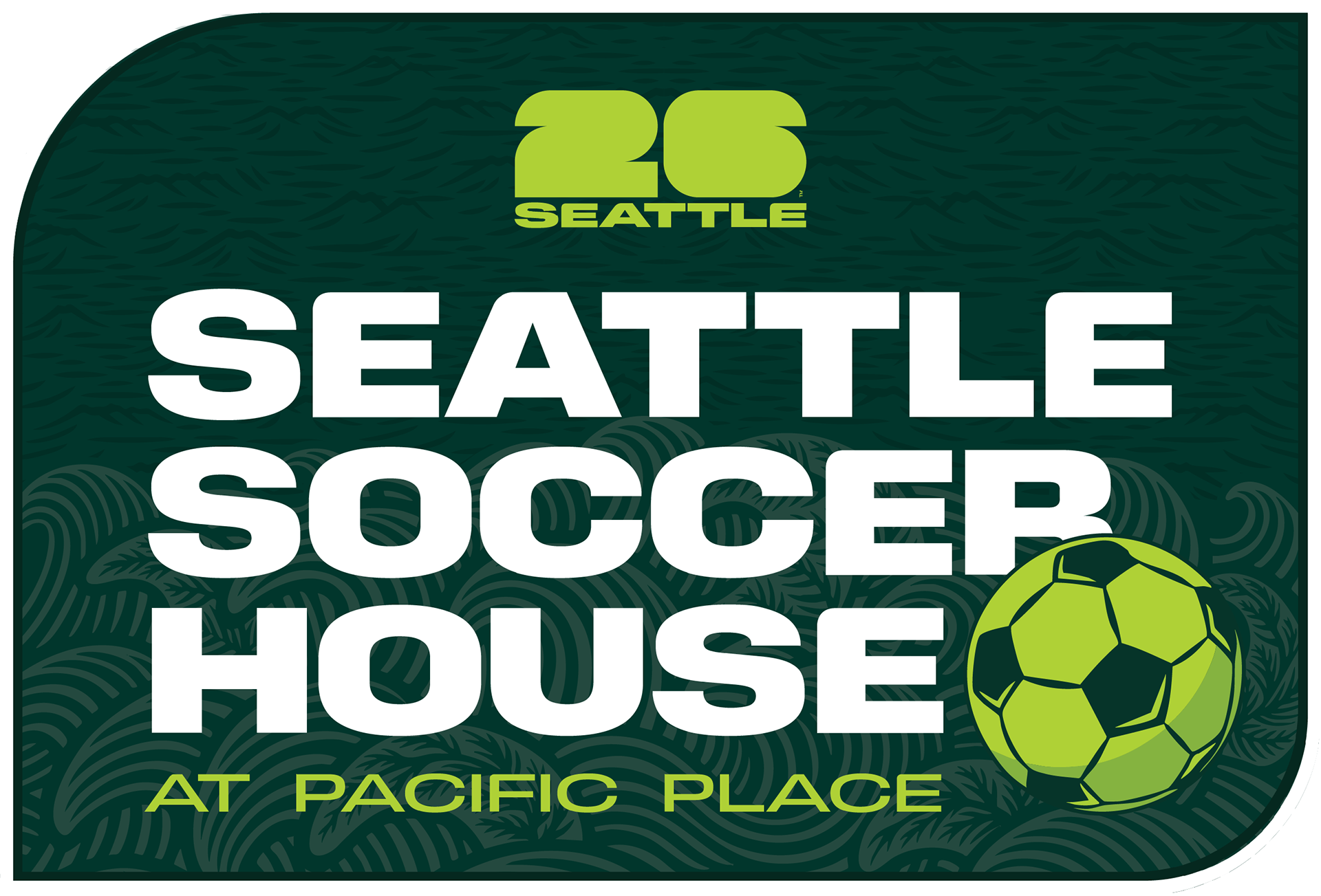
SEATTLE SOCCER HOUSE
One of the most successful strategic decisions our leadership group made was to have a 'distributed model' where, instead of just one central location in Seattle to watch all matches (such as a 'FIFA Fan Festival' as most other Host Cities had), there would be four. This decision aimed to spread the wealth across the city and ensure watch parties met fans and locals where they were. At the heart of the distributed model sits Seattle Soccer House, which transformed 27,000 square feet of Pacific Place into a free, all-ages fan destination.
Anchored by a 70-by-40-foot, four-story LED screen — Seattle's largest for viewing the tournament — the space was organized into distinct zones, including a Pacific Northwest–themed "Forest Entry," a maritime-inspired social hub called "The Watering Hole," a main viewing area called "The Urban Core," and a PNW Marketplace featuring a cultural store presented by the Puyallup Tribe of Indians. The experience was hosted by SeattleFWC26 in coordination with Alaska Airlines, Amazon, Boeing, Emerald Queen Casino, Microsoft, Port of Seattle, the Puyallup Tribe of Indians, and the University of Washington, and was built with accessibility in mind — offering ADA seating, closed captioning, language interpretation, and a sensory room for fans who need it.
I led the creative and art direction for Seattle Soccer House, coordinating with event producer Connor's & Co. designers and producing the official logo. This was strategically a space to fully let the Legacy brand take hold and to further promote our other Legacy-focused initiatives - such as the Unity Loop, SEA Beacons, Selfless Stations, and local Host City Supporter sponsors and donors.
Additionally, once Seattle Soccer House was propped up, I led the charge to market it to the public and get people to show up. Utilizing a designated marketing budget, executed this by tapping local social media influencers/ content creators, organizing celebrity ambassadors/athletes to make guest appearances, overseeing the capture of photos and video content to promote on social media (posting daily), the web, and email, and, lastly, producing a video commercial to play on local CTV.
Additionally, once Seattle Soccer House was propped up, I led the charge to market it to the public and get people to show up. Utilizing a designated marketing budget, executed this by tapping local social media influencers/ content creators, organizing celebrity ambassadors/athletes to make guest appearances, overseeing the capture of photos and video content to promote on social media (posting daily), the web, and email, and, lastly, producing a video commercial to play on local CTV.
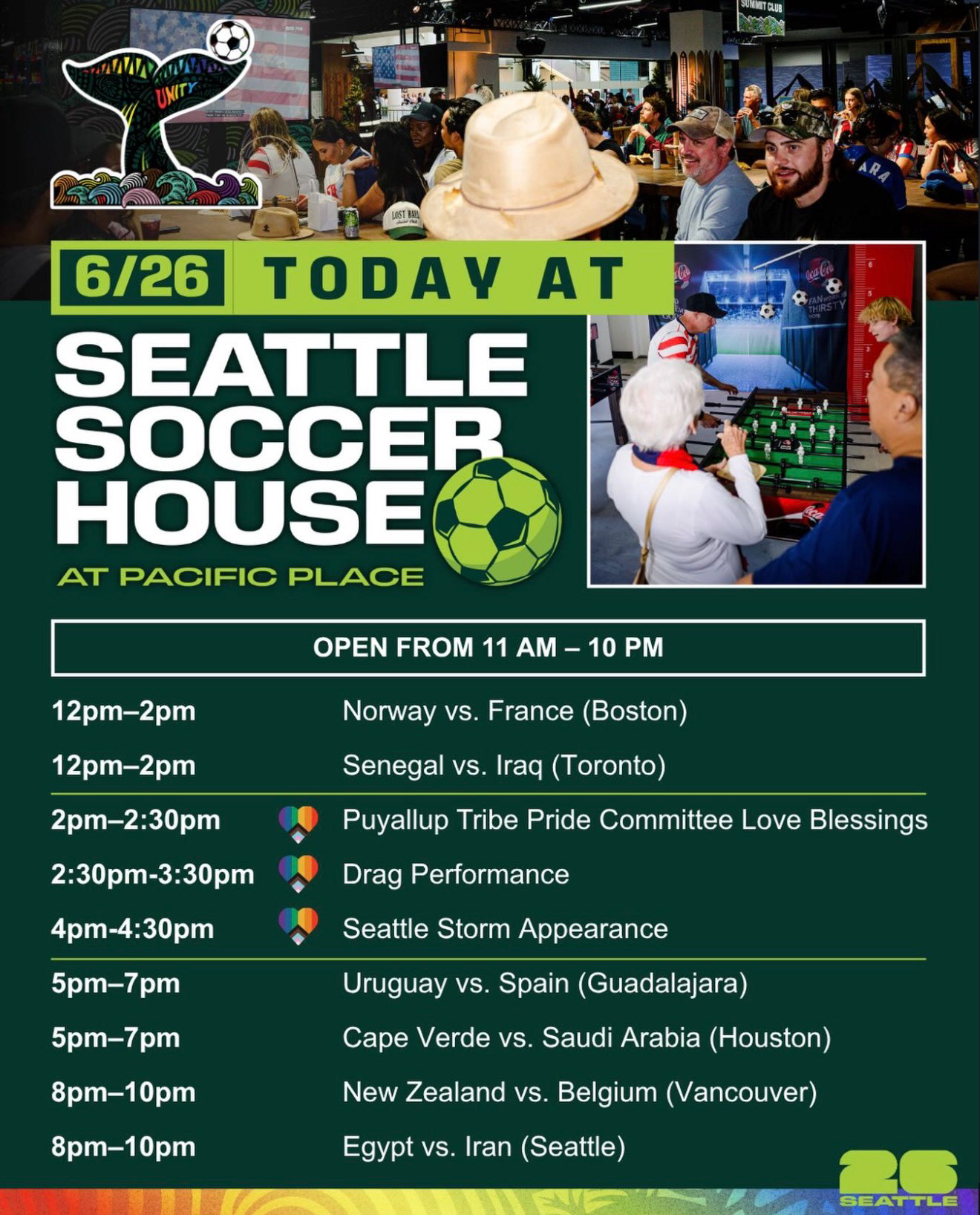
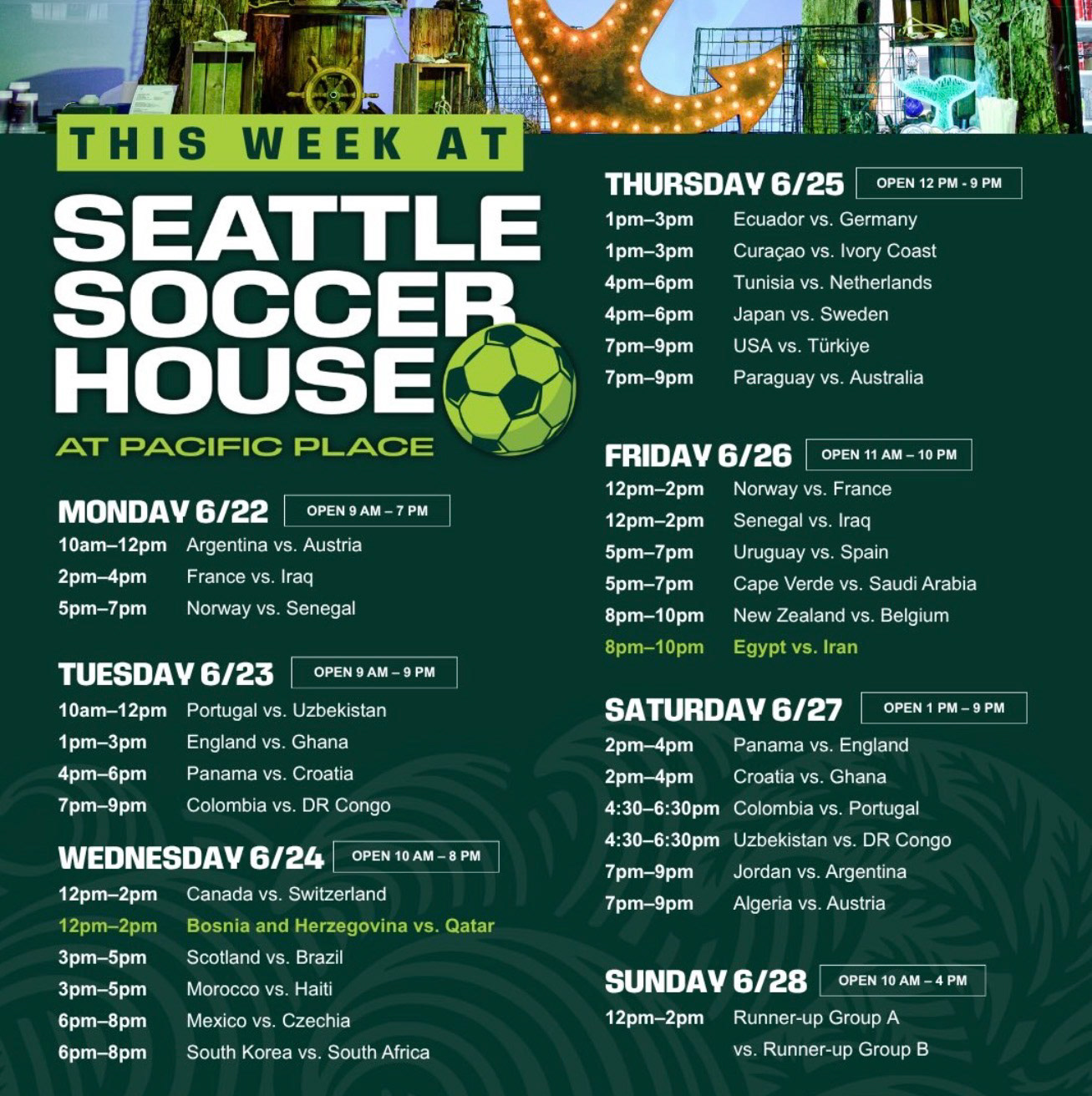
Examples of daily and weekly graphics posted on our marketing channels to show which games Soccer House plans to show, along with any special events or celebrity/athlete appearances.
SEA Beacons
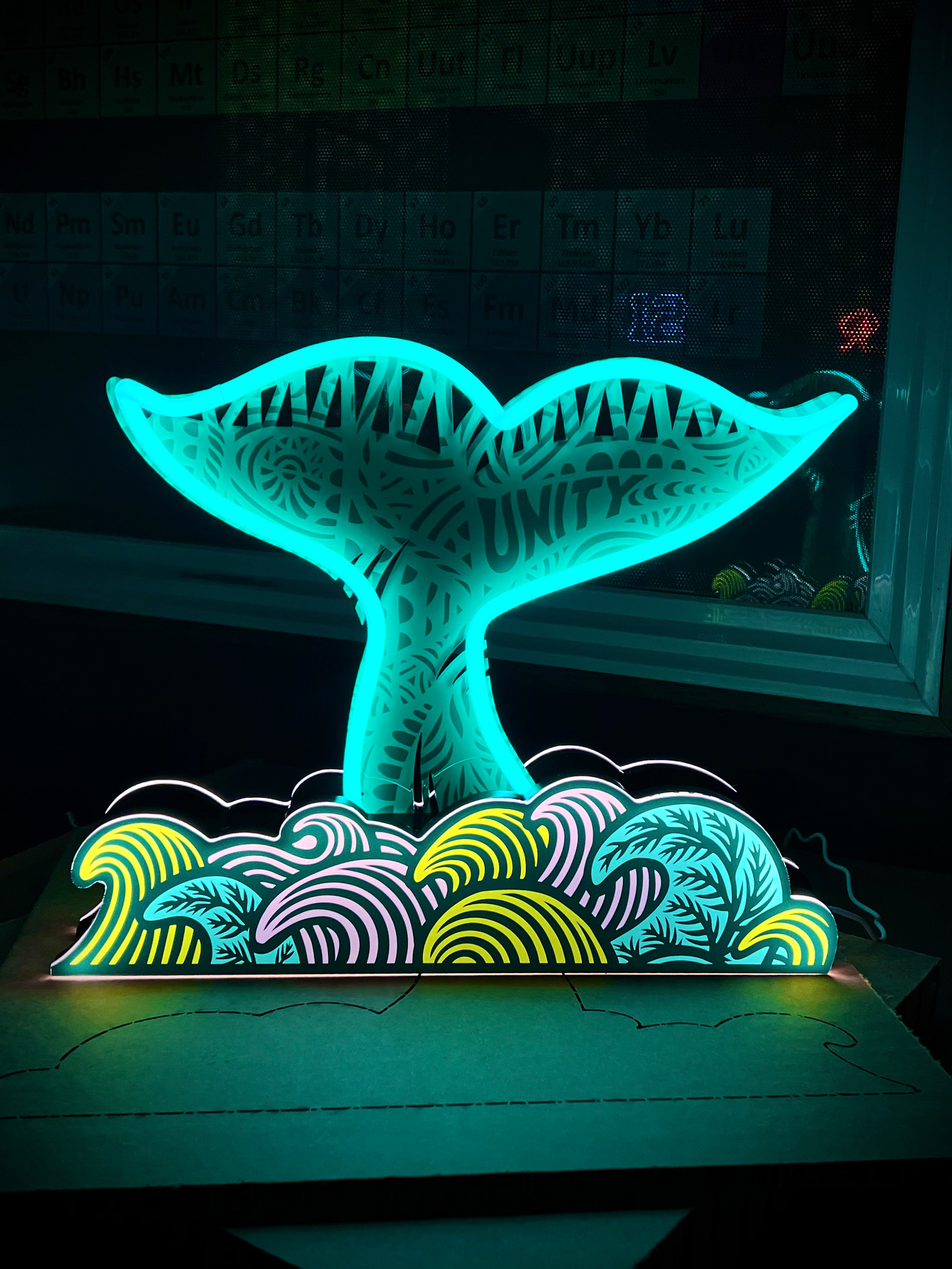
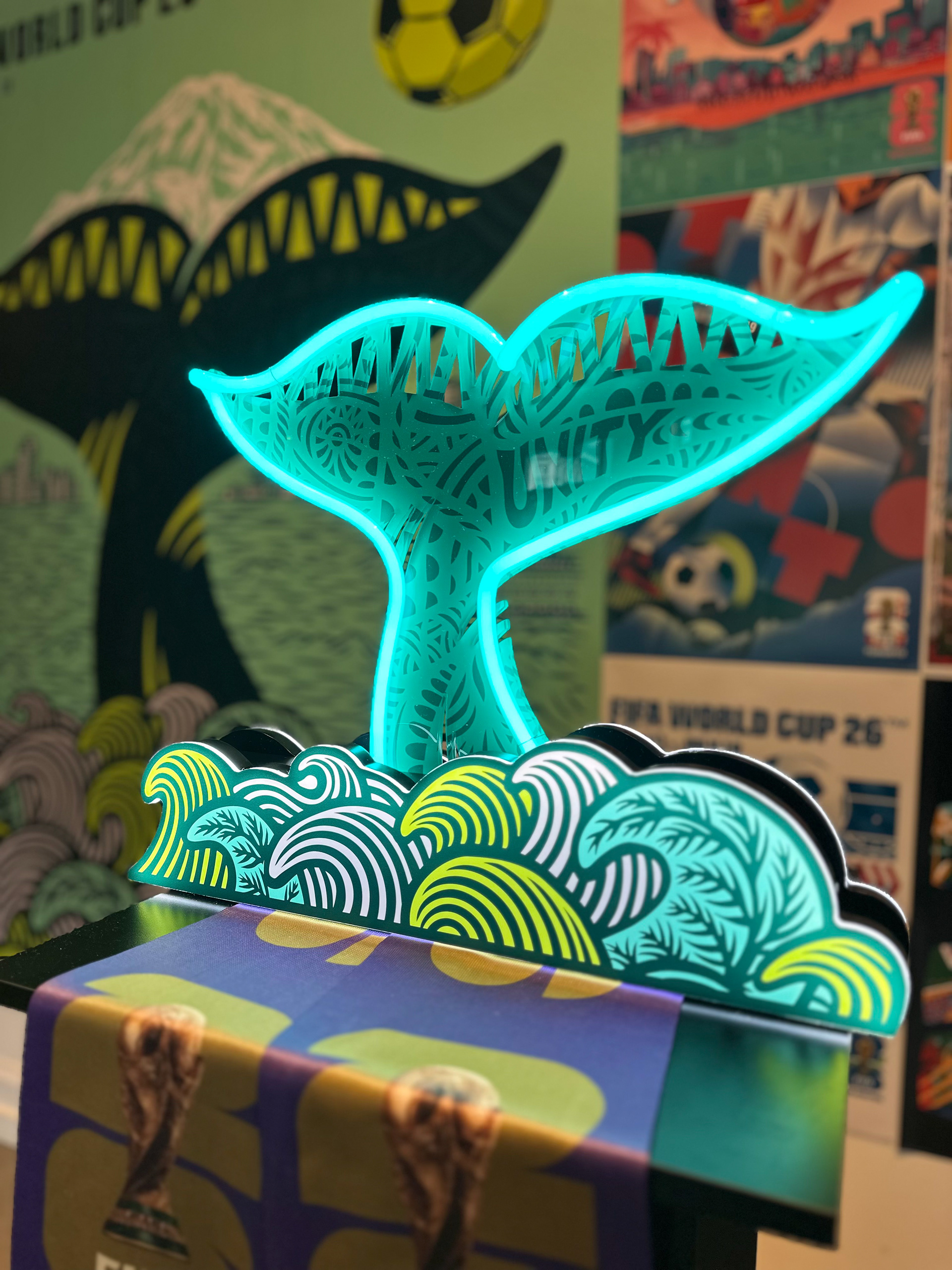
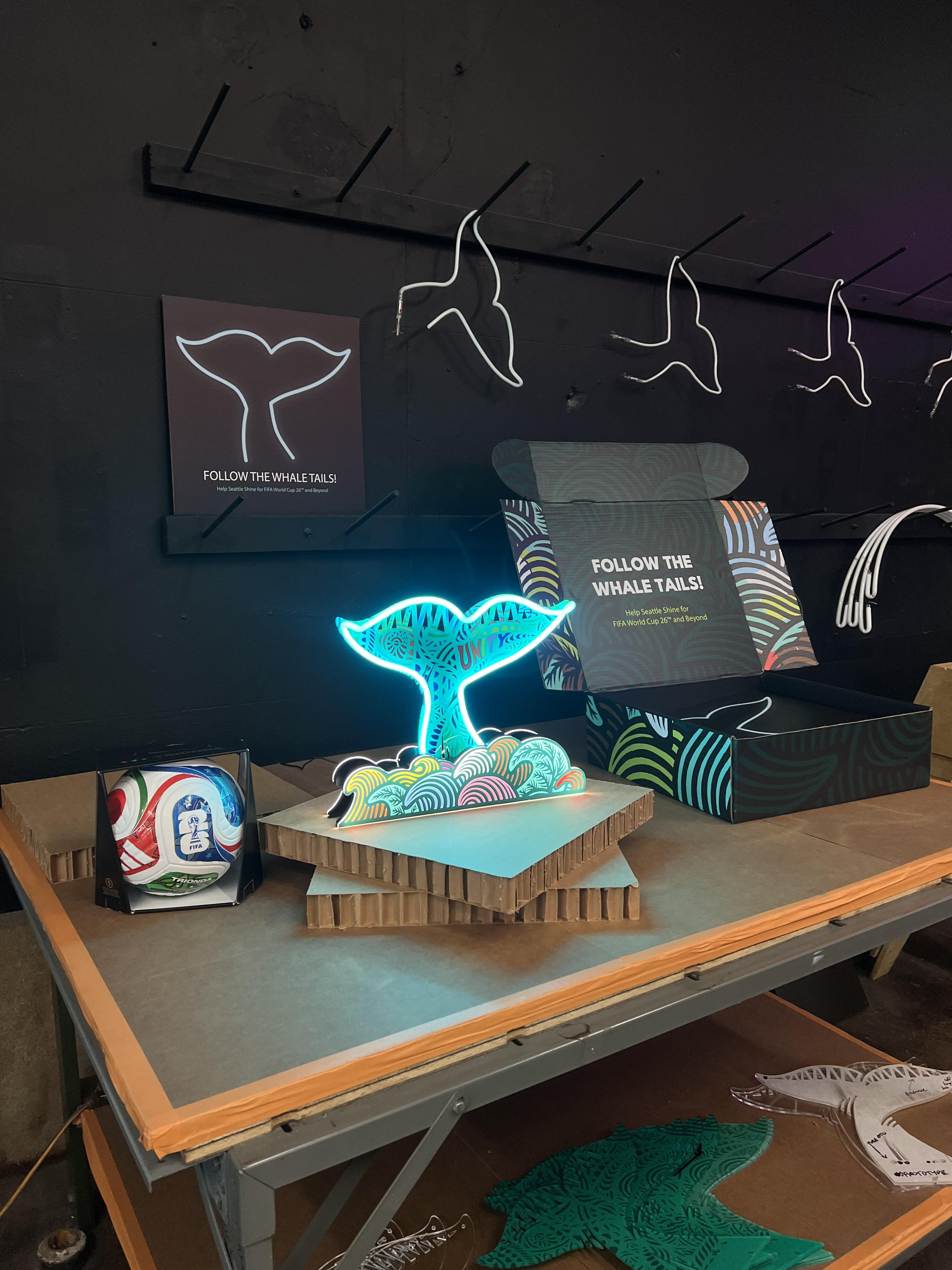
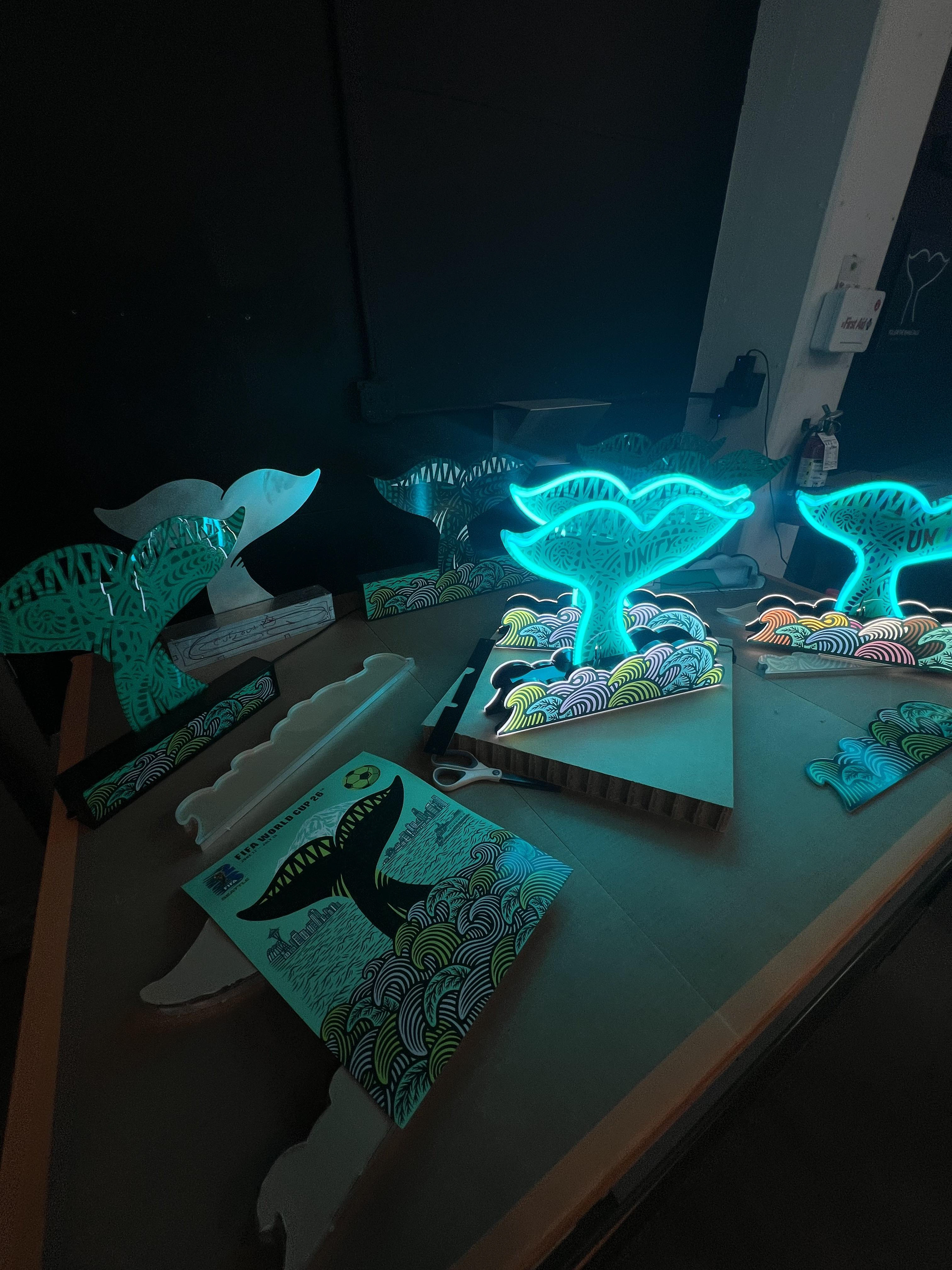
More than 350 handmade neon whale tails that turned Seattle's small businesses into the city's welcome to the world.
The Challenge:
When the FIFA World Cup came to Seattle, the city wanted every neighborhood to share the spotlight, not just the stadium. But FIFA's official Host City marks came with restrictions that kept local businesses from using them. We needed a way for storefronts across the region to say "the world is welcome here" without a single FIFA logo.
The idea: "Follow the Flukes!"
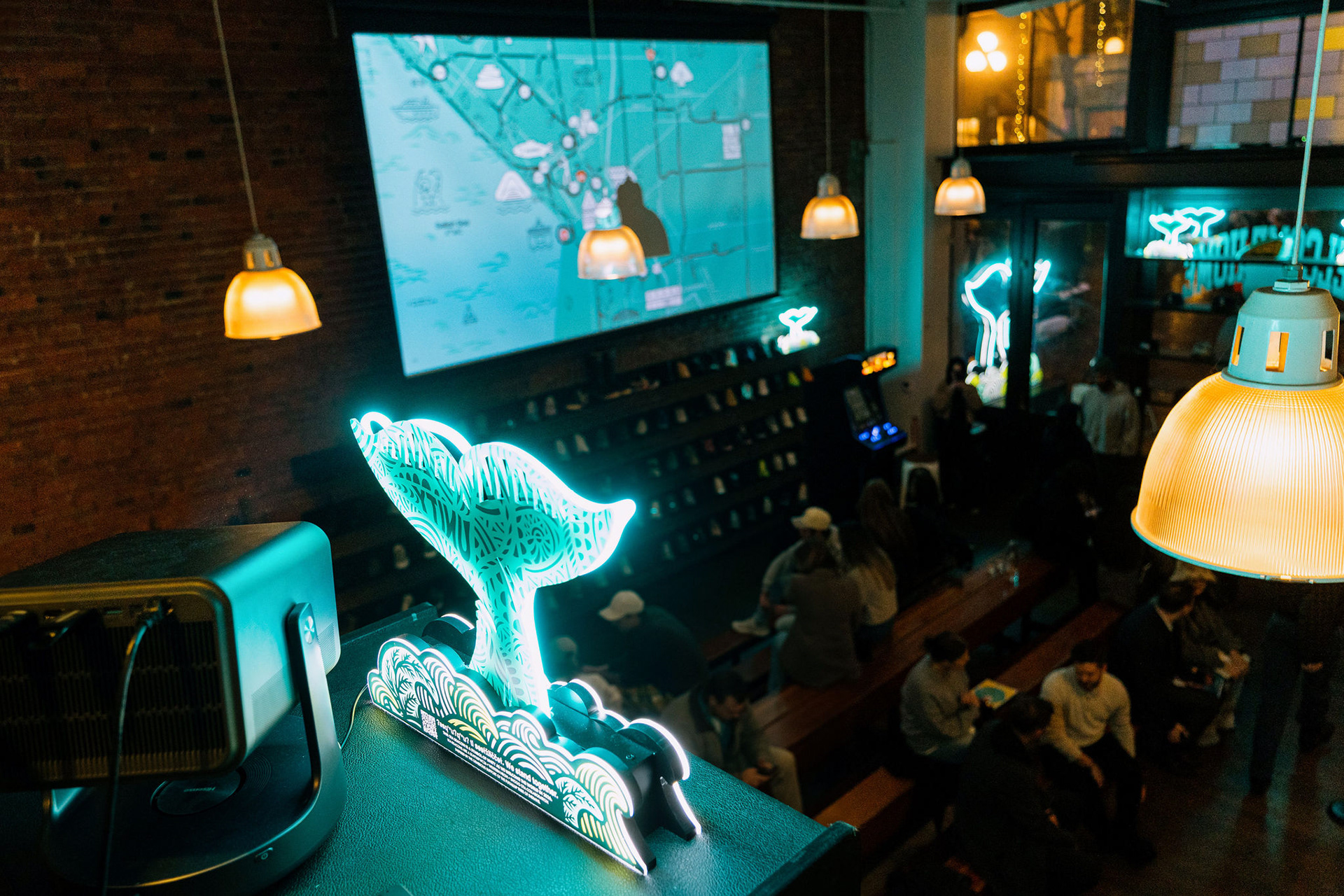
Instead of logos, a glowing whale tail. More than 350 locally handmade neon SEA Beacons appeared in storefronts and gathering places, leading visitors from the waterfront into Seattle's neighborhoods - and even across Washington State.
Drawn from Shogo Ota's Host City Poster, the Beacons became the most recognizable marker of the Unity Loop, SEA&WIN Mobile App experience, and a distinctly Seattle welcome to the world. The invitation was simple: Follow the Flukes and Get in the Loop.
My Role:
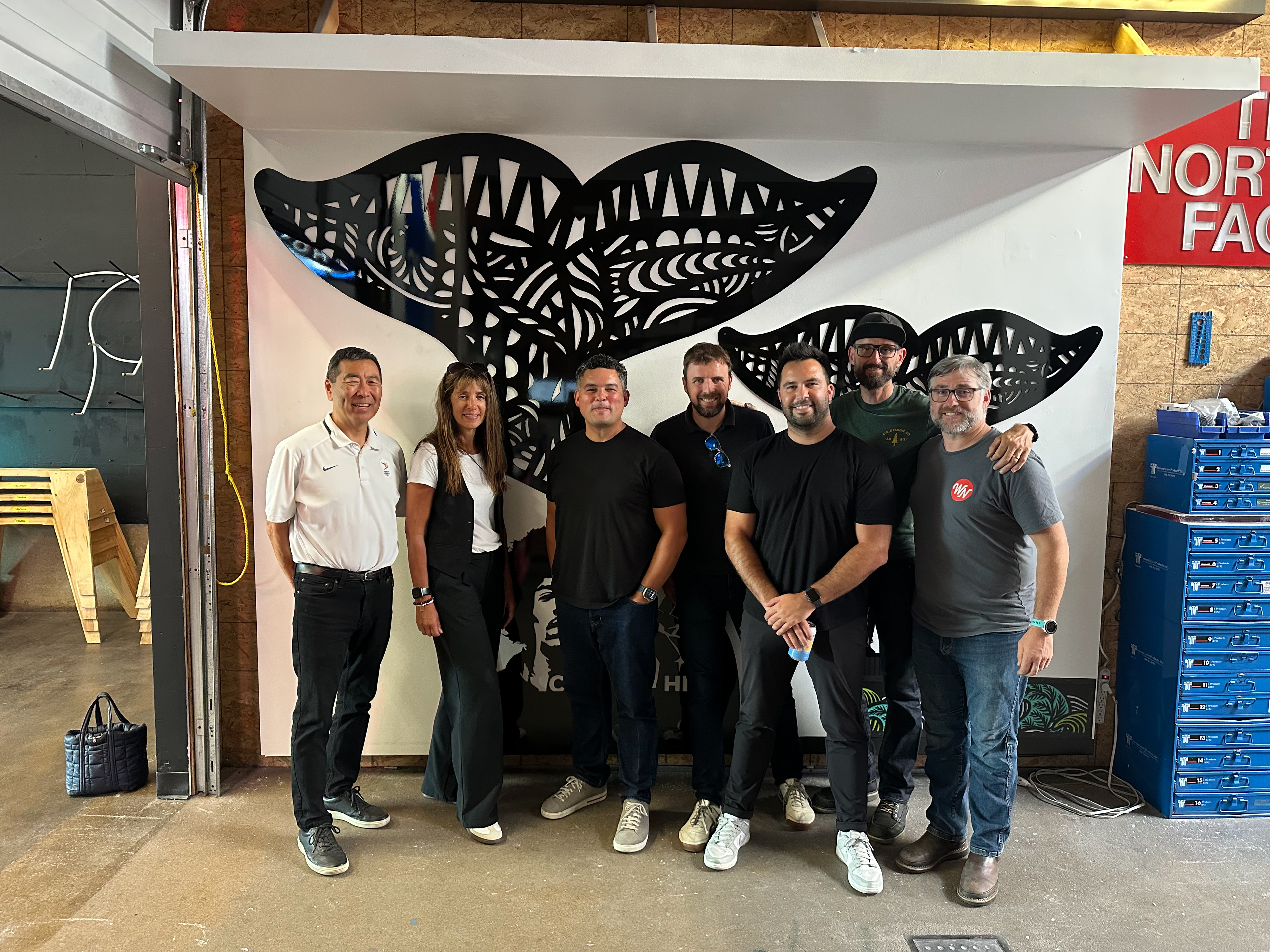
I worked alongside Leo Flor, our Chief Legacy Officer, who led the SEA Beacons program. As the brand and marketing lead, I helped shape the campaign's look, connection to our other Legacy initiatives, and overall traction.
Design Direction – Working with Western Neon, I guided the visual development of the Beacons, ensuring they aligned with the Host City brand system I created based on Shogo Ota's poster. We also created versions of the Sea Beacons in LGBTQ+ and Trans flag colors to better connect the signs to LGBTQ+ and Trans-owned businesses.
Digital Integration – Pushed for how each Beacon would connect with its corresponding business or location to the Unity Loop and the SEA&WIN app. This ultimately bridged the gap between the digital experience of the SEA&WIN Mobile App and the physical Sea Beacons around the city on the Unity Loop and beyond.
Branded Content Strategy – Delivering each Sea Beacon to each small business was an opportunity to deliver the Sea Beacons operationally, while also profiling each small business through a short video posted to our social media and the small business's social media. We provided these videos to the businesses for free. This resulted in over 30 small businesses being profiled and amassing over 573K views on Instagram alone.
Designed here, made here:
Western Neon designed and handcrafted every Beacon in its SODO shop. The shape grew from the Host City Poster and from conversations with local Indigenous communities, which added a cedar branch motif to the waves beneath the whale tail. Nearly all were donated to local small businesses, nonprofits, and cultural organizations. What could have been temporary tournament signage became hundreds of permanent pieces of locally made art.
Spotlight on small business:
Community organizations placed Beacons with locally and independently owned businesses across Pioneer Square, Chinatown-International District, Capitol Hill, the Central District and beyond. For 30 of them, we produced short films introducing the people and stories behind the glowing whale tail in the window, in collaboration with Conner Cayson, aka @FindMeInSeattle, who creates short videos highlighting different foods, small businesses, and events happening in Seattle.
Impact:
350+ handmade neon Beacons installed across Seattle and Washington
30 small-business profile videos produced and posted
All Sea Beacons donated/gifted as permanent art
One of the program's activations that exceeded expectations in our post-event review
The World Cup ended – The SEA Beacons stayed lit.
Future major events will add their own versions to the network, continuing an invitation that began in 2026: Follow the Flukes and see where they take you.